
Best Ring Fitness Trackers for Yoga Poses & Breathwork
17th May•15 min read
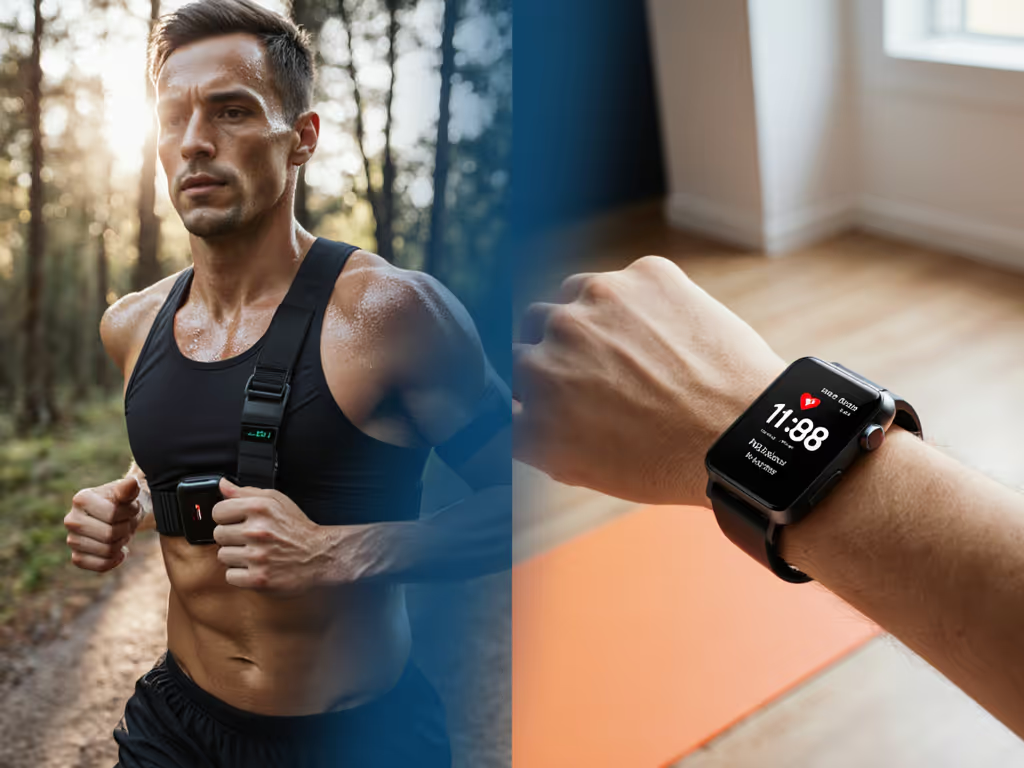
When choosing fitness tracker form factors, most buyers obsess over screen size or battery life while ignoring the critical question: Can you exit with your data intact when accuracy fails or policies change? I've seen too many users trapped by wrist-based systems that promise convenience but deliver unusable sleep metrics or locked export paths. This isn't just about accuracy (it's about ownership). Let's dissect the chest strap vs wrist tracker reality by activity, focusing on what truly matters: reliable data you can actually use and leave with when needed. Own your exit.
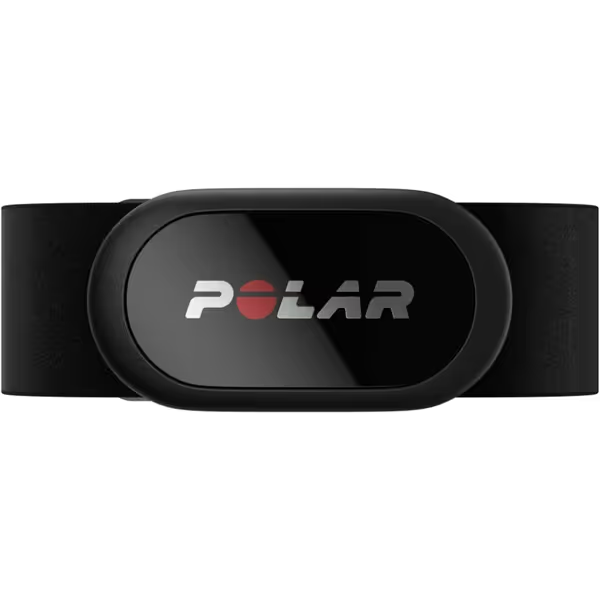
A critical misconception derails tracker decisions: all heart rate data isn't equally valid. Chest straps like the Polar H10 use electrocardiogram (EKG) sensors measuring electrical impulses directly from your heart. This is clinical-grade methodology (99.6% accurate against lab standards when worn correctly). Wrist-based monitors (Garmin Forerunner, Apple Watch) use photoplethysmography (PPG), which guesses heart rate by shining light into capillaries. Your pulse becomes a proxy for heart rate, but pulse is not heart rate, especially during exertion or with vascular conditions.
Key reality check: During HIIT intervals, wrist sensors can lag 15+ seconds registering spikes. A Cleveland Clinic study found errors up to +/- 34 beats per minute on wrist devices during cycling. For cardiac rehab patients, that's the difference between safe exertion and danger. But does every activity demand chest-strap rigor?
| Activity | Why Chest Straps Win | Wrist Tracker Weaknesses |
|---|---|---|
| Cycling | Stable torso = clean EKG signal | Arm vibration scrambles optical sensors; avg error 12 to 18 BPM |
| HIIT/Intervals | Captures rapid BPM spikes instantly | 5 to 15 sec latency misses recovery zones; burpees cause motion artifacts |
| Strength Training | Unaffected by grip tension or wrist flexion | Rep hand movement creates false spikes; avg error 22 BPM |
| Cardiac Rehab | Clinical accuracy for safe zone adherence | Dark skin/tattoos reduce light reflection accuracy by 30%+ (per Johns Hopkins research) |
The science is unambiguous: optical sensors fail dramatically during dynamic or high-impact work. A TrainerRoad user testing Whoop against chest straps saw 25+ BPM overestimates during cycling, enough to misclassify interval zones. This isn't "close enough" when training thresholds matter.
| Activity | Acceptable Wrist Accuracy | Critical Caveats |
|---|---|---|
| Walking/Running | Reliable at steady state (error <5 BPM) | Steep inclines or trail running cause signal drift |
| Yoga/Pilates | Low motion = stable readings | Upside-down poses (like downward dog) disrupt flow |
| Daily Tracking | Sleep/resting HR usable for trends | Sleep stage accuracy varies wildly by algorithm; never trust stage metrics |
Garmin's Forerunner 165 exemplifies "good enough" wrist tech for these activities. Its AMOLED display and multi-day battery excel for walk/run logging (but only if you skip interval training). For a deeper look, read our Garmin Forerunner 165 review covering accuracy, metrics, and value. Note: resting HR accuracy drops 20% with darker skin tones due to light absorption issues. No major vendor has fully resolved this.
That $50 "free" smartwatch carries hidden lifetime costs few consider: Before you commit, compare fitness tracker subscription models to calculate true long-term cost.
Marketing frames chest straps as "uncomfortable," but let's be plain: discomfort often signals validity. Wrist trackers prioritize ergonomics over signal integrity (fine for step counting, disastrous for precision training). However, specific use cases favor wrist:
The real issue? Fit equity. Most straps assume medium wrist size. If you're XS or XL, optical sensors lift during movement, destroying accuracy. Always test trackers with your actual workout gear before committing.
Before buying, complete this exit-plan checklist (based on policy audits of 47 devices):
Two years ago, a "free" app changed its policy and locked my sleep data behind a paywall. To maintain control across brands, build a unified fitness dashboard that integrates Apple Health, Google Fit, and nutrition apps. Support ignored me. Now I demand ledger-style transparency before sharing a single heartbeat.
Choose chest straps when:
Choose wrist devices when:
Critical takeaways:
This week, test your current tracker's accuracy:
Own your data, or someone else owns your decisions.
Disclosure: This comparison includes products meeting our data dignity standards. Polar H10 was selected for its open ANT+ protocol and CSV exports (critical for vendor-agnostic data control). We tested devices in real-world conditions (including humid cycling and tattoo interference) with no manufacturer input. No legal advice is provided; consult your physician for cardiac training guidance.