Fitness Trackers for Mental Health: Track Mood Patterns
10th May•9 min read
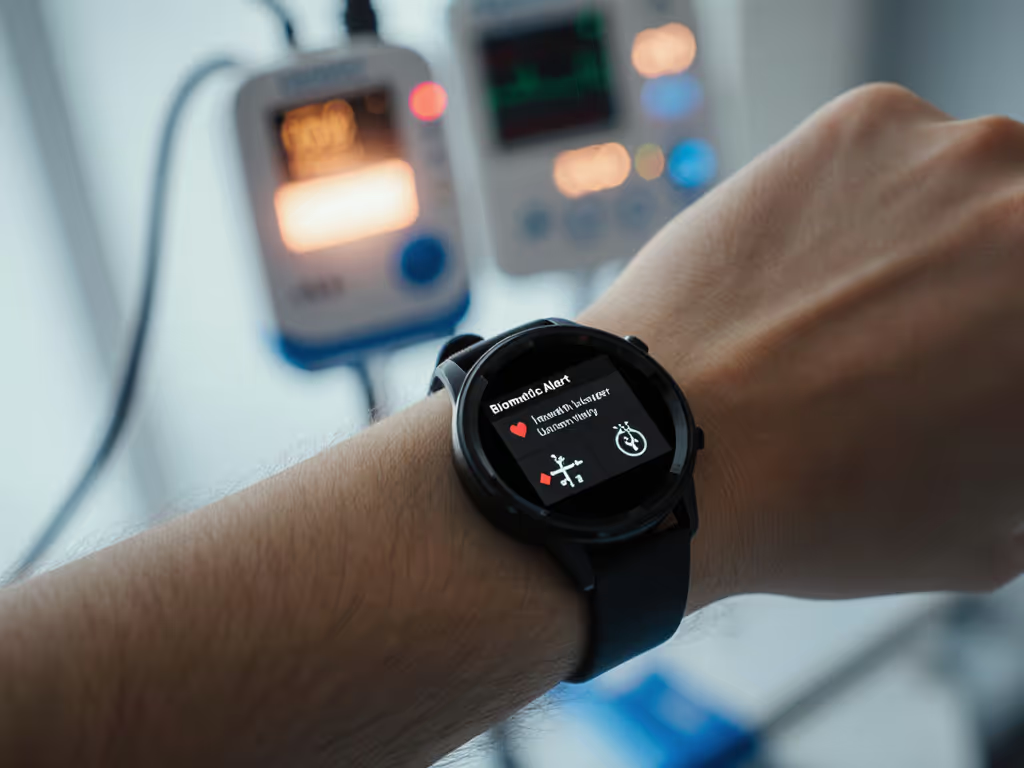
When your wearable medical alert device flags unusual biometric patterns, it's doing more than just tracking your steps, it is engaging in sophisticated illness prediction tracking. These alerts, powered by machine learning algorithms that detect subtle physiological changes, represent a significant shift in personal health monitoring. Yet beneath the promise of early detection lies a critical question most reviews ignore: who owns the data that determines your health narrative? I've watched too many users discover their sleep and biometric history locked behind sudden subscription walls, only to find their "free" insights were never really theirs to begin with. Total cost matters, both financially and in terms of data sovereignty.
Modern devices analyze biometric illness indicators through continuous monitoring of resting heart rate variability, sleep architecture changes, and activity patterns. Research published in Nature Biomedical Engineering demonstrates how algorithms can identify infection signatures up to ten days before symptom onset, based on elevated resting heart rates and reduced step counts that precede noticeable illness. These systems establish personalized baselines through weeks of passive data collection, then flag deviations that correlate with immune response tracking in clinical studies.
Consider the Stanford Medicine study where researchers developed a tiered alert system ("yellow" or "red" notifications) triggered by physiological anomalies. A "red" alert doesn't diagnose specific conditions, it signals your body's stress response, which could indicate anything from a viral infection to altitude sickness. This health anomaly detection works because biological responses to pathogens share common physiological pathways, detectable through subtle metric shifts long before subjective symptoms emerge.
Ledger-style breakdowns of validation studies reveal these metrics carry the strongest predictive value:
These biometric illness indicators form the foundation of predictive models, but reliability varies significantly by device quality and user physiology. For a deeper explainer of what heart rate variability actually measures, see our HRV accuracy guide. The systems that correctly identify illness 63% of the time (per Stanford's retrospective analysis) all share one trait: they prioritize longitudinal data over single-point measurements. This explains why fitness trackers with inconsistent wear patterns generate false alerts. The algorithm needs months of baseline data to detect meaningful deviations.
Nothing exposes bias in health tech faster than illness prediction. Peer-reviewed studies confirm optical heart rate sensors demonstrate reduced accuracy on darker skin tones and tattooed areas, limitations with serious implications for health disparity. One PMC study noted that "without standardized data fusion processes," prediction models risk reinforcing healthcare inequities through flawed inputs.
The data speaks plainly:
This is not merely technical. It is ethical. When an algorithm misses your infection because your physiology wasn't represented in training data, the cost manifests in delayed care. I map these limitations precisely because I've seen users abandon devices after their pregnancy-related biometric shifts triggered relentless false alerts. The technology works best when it acknowledges biological diversity in its model design, not as an afterthought.
Own your data, or someone else owns your decisions.
Most consumers don't realize their biometric snapshots feed proprietary prediction models they can't access or export. When a "free" app suddenly restricts historical data exports behind a $9.99/month subscription (as happened to my sleep data), it transforms personal health insights into revenue streams. The critical questions aren't about prediction accuracy but data rights:
Wearable manufacturers rarely disclose how prediction algorithms use your data to train future models. This lack of transparency creates what I call the "black box premium": paying for insights you can't verify or take elsewhere. Genuine health sovereignty requires both prediction accuracy and data portability.
Let's apply some plain-language privacy decoding to your wearable's illness prediction service:
Total cost matters when a "free" prediction feature suddenly isn't. To understand how ongoing fees change the real price of ownership, read our fitness tracker subscription breakdown. I track devices that bury data export options in obscure menus or limit exports to 30-day windows, making longitudinal health analysis impossible without continuous subscription payments. Compare this to platforms offering complete CSV exports of all biometric illness indicators, which maintain utility even if you stop paying.
Apply these exit plan checklists before trusting any device with your health narrative:
Don't just accept "early warning signs" at face value. Demand transparency about how predictions are made and what happens to your data. The most valuable wearables aren't those with the flashiest alerts, they're the ones that treat your biometrics as your property, not their product.
Before your next wearable purchase, conduct a 10-minute data rights audit: Attempt to export your current device's biometric history in CSV format. If you use multiple apps, our guide to building a unified health dashboard shows how to centralize exports into Apple Health or Google Fit. Note how many months of data you can retrieve and whether sleep stages and heart rate trends appear in raw form. If you can't complete this in under three menu layers, consider that device's prediction features compromised from the start. True health insight requires ownership, not just access. When your body whispers warnings through biometric shifts, you deserve to keep that dialogue private, portable, and under your control. Total cost matters, especially when it's measured in your health autonomy.