Fitness Trackers for Mental Health: Track Mood Patterns
10th May•9 min read
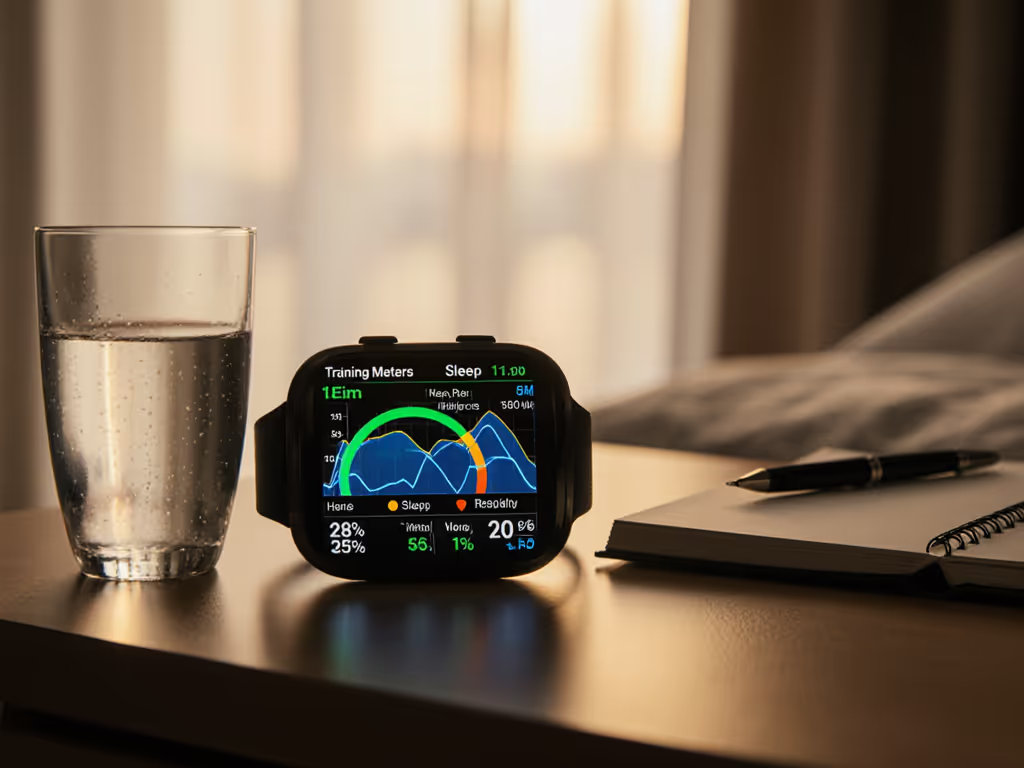
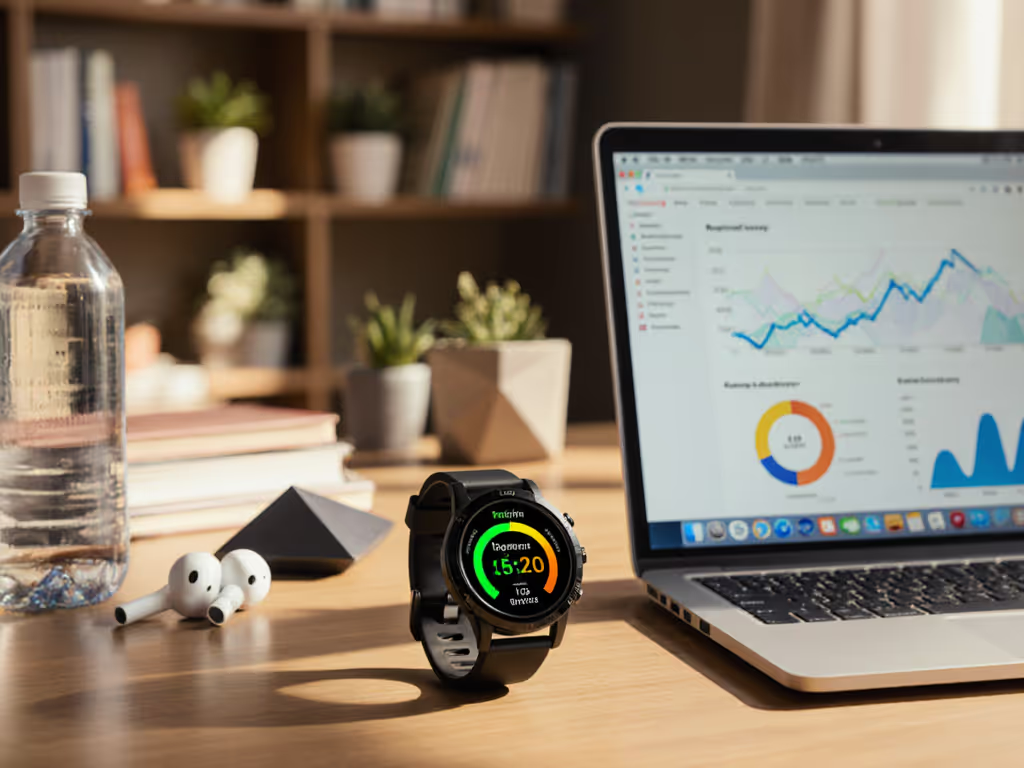
Let's talk straight about recovery metrics and training readiness scores. These numbers aren't just digital confetti, they're decision points that determine whether you push hard or pull back. But if you've ever stared at your morning readiness score wondering whether to trust it or your gut, you're not alone. As someone who's tested cross-platform setups across multiple ecosystems, I've seen how these metrics can either guide smart training or create unnecessary friction. Value isn't in the logo, it's outcomes per dollar plus an easy exit strategy. In my family's experiment with three different wearables, we discovered that platform-agnostic understanding matters more than brand allegiance. Switch smart, not hard.
Most athletes I work with fall into one of two camps: those who blindly follow their recovery metrics and those who ignore them entirely. Neither approach serves long-term training adaptation. These composite scores synthesize physiological data (like HRV and resting heart rate) with behavioral inputs (sleep duration, perceived stress) to estimate your body's capacity for work today.
The problem? Different platforms calculate these scores differently:
Remember: a readiness score isn't absolute truth (it's a conversation starter between your data and your lived experience).
Don't treat these metrics as gospel. Before adjusting your workout based on a low readiness score, ask:
As Alan Couzens explains, meaningful changes must be measured in z-scores relative to your baseline, not arbitrary thresholds. If your normal HRV range is 50ms wide, a 20ms drop means something very different than for someone with a 10ms typical range. Most platforms do this normalization behind the scenes, but understanding the principle prevents overreacting to normal fluctuations.
Scenario-based comparisons reveal something counterintuitive: sometimes pushing through a low readiness score delivers better long-term adaptation. If you're tapering for competition, honoring recovery metrics matters more than during base building. Map your training phase against your readiness score patterns (this platform-agnostic framing prevents dogma).
My family's "aha" moment came when our premium device consistently flagged low readiness while we felt fresh. We started comparing across ecosystems and discovered the algorithm misinterpreted our morning coffee ritual as stress. Plain-speak budgeting means tracking both your device's output and your actual feelings for 2-3 weeks before trusting the pattern.
When your WHOOP strain target suggests 8 while you feel capable of 16, here's my checklist-driven approach:
If your readiness score is low, don't panic, check the contributing factors. Is it low HRV? Poor sleep? Elevated resting heart rate? WHOOP's Journal feature helps identify which behaviors (like late meals or alcohol) most impact your recovery. This transparency matters more than the final number.
Instead of abandoning your threshold run, do one 5-minute interval at target pace. If you hit power/pace comfortably, continue. If you're struggling, switch to active recovery. This approach values real-world outcomes over algorithmic predictions.
For 4 weeks, document:
This data reveals whether following the metrics actually improves your outcomes, a crucial price-to-performance analysis most users skip.
My family's switch from three ecosystems to a single mid-tier solution worked because we defined clear migration criteria:
This checklist prevented sunk-cost thinking and simplified our decision.
Many users I coach experience "readiness score fatigue" (the mental load of constantly checking metrics before simple decisions). The true value isn't in perfect scores but in systems that reduce cognitive load while improving outcomes. If you're feeling swamped by charts, our guide to using ring fitness insights without data overload can help you simplify.
Consider these often-overlooked costs:
The mid-range solution often beats premium here. My testing shows that devices with transparent metrics (like Garmin's breakdown of Body Battery contributors) enable better decisions with less mental overhead than "black box" scores.
If you're ready to move beyond readiness score anxiety, follow this progression:
When my family ran this analysis, we discovered our premium device's $399 price plus $12/month subscription delivered only marginally better insights than a $215 mid-tier option. The switch saved $300 annually while reducing morning decision fatigue. We didn't "downgrade", we right-sized.
Your training adaptation depends less on perfect metrics and more on consistent, intelligent application. As I always tell clients: Switching costs matter as much as features on paper. Value emerges when your technology serves your body, not the reverse.
Ready to test your approach? Track your next 7 days comparing readiness scores against actual workout quality. You'll likely find specific patterns where the metrics help most (and where your own experience still reigns supreme). This simple experiment costs nothing but delivers insights no algorithm can replicate. Now that's platform-agnostic value.