TrackverityTrackverity

Fitness Trackers for Mental Health: Track Mood Patterns

By Mateo Silva10th May
Fitness Trackers for Mental Health: Track Mood Patterns

Fitness trackers for mental health have moved beyond step counts and workout metrics. Today, many wearables monitor biometric signals (heart rate variability, sleep architecture, and recovery scores) that correlate with stress, mood stability, and emotional resilience. But here's what matters most: a tracker is only useful if it fits your life and reduces friction, not adds to it.

This guide addresses a real tension. You're looking for actionable insights into your mood patterns without a device that nags you into shame spirals or serves misleading data. You want to understand what your wearable is actually measuring, why the numbers matter (and when they don't), and how to set it up so it supports rather than stresses you out.

Why Track Mood and Mental Health?

Mental wellness is built on patterns you can see. Chronic stress often shows up in sleep disruption, elevated resting heart rate, or compressed recovery windows (signals a tracker can flag long before you consciously feel burned out). Biometric mood tracking works best when it helps you notice early rather than judge yourself later. For a research-backed overview of how wearables quantify stress and what is valid versus hype, see our stress tracking validation guide.

A few examples:

  • Heart rate variability (HRV) measures the beat-to-beat changes in your heart rhythm. Higher HRV often correlates with better stress recovery and emotional regulation; consistently low HRV may signal chronic stress or poor sleep.
  • Sleep quality affects mood directly. A tracker logging your sleep stages helps you spot when fragmented nights cluster with low mood days.
  • Resting heart rate trends can reveal the difference between "healthy training stress" and "I'm running on fumes."
  • Physical recovery scores integrate sleep, HRV, and previous training load to tell you when your nervous system is ready to engage or when it needs gentleness.

The insight isn't "you feel bad because your HRV is low." Rather, it's: "I notice I feel more resilient when I sleep past 6 hours and do a 10-minute wind-down after work." Small, repeatable wins beat flashy charts and streaks.
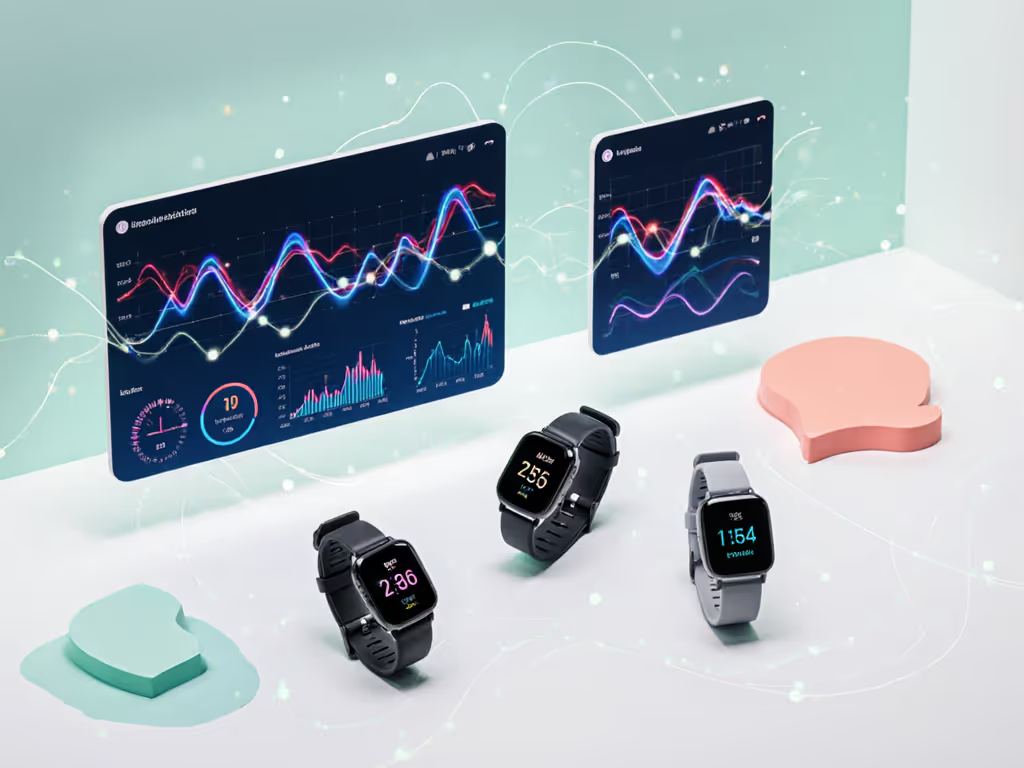
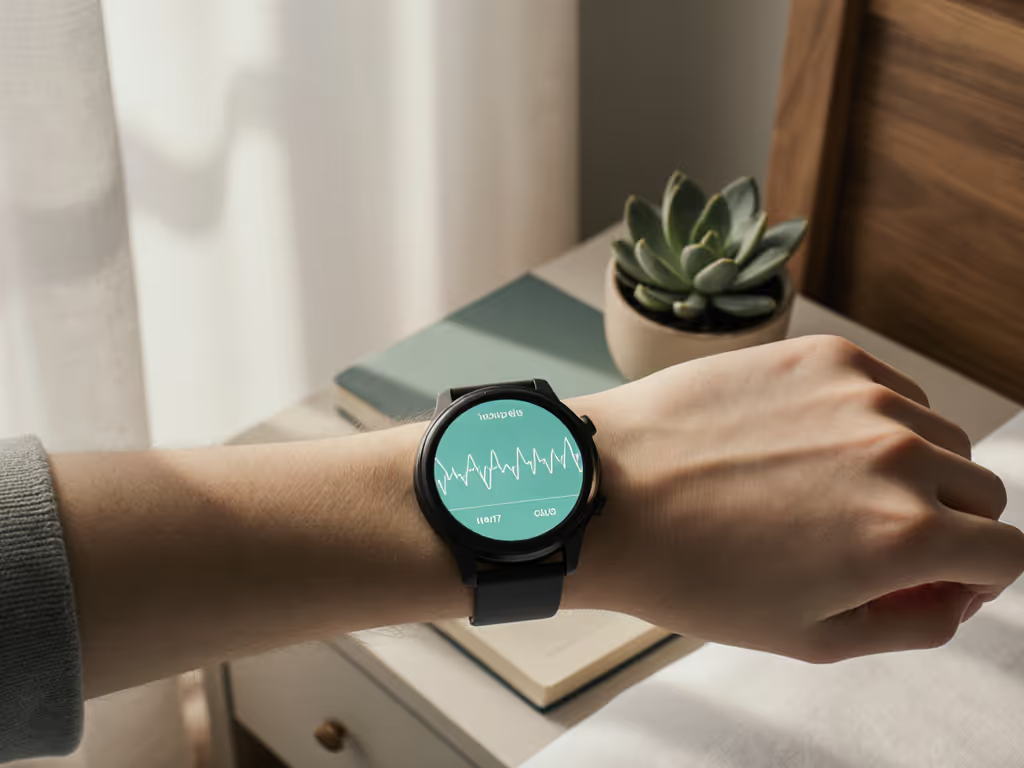
wearable_biometric_signals_heart_rate_variability_sleep_tracking_dashboard

Understanding Anxiety Tracking With Wearables

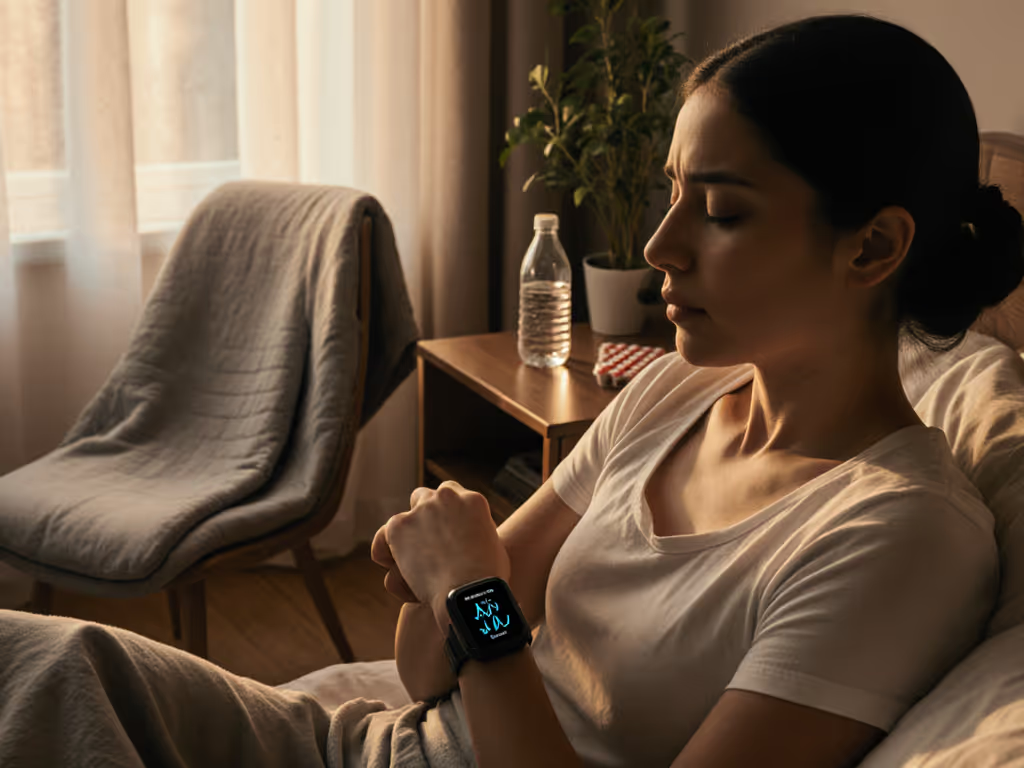
Anxiety tracking with wearables typically focuses on physiological markers (heart rate spikes, respiratory rate, skin temperature) rather than self-reported worry. This is helpful and limited at the same time. To calibrate alerts and reduce false positives, use our guide to interpreting stress metrics.

Your tracker can't diagnose anxiety, and it shouldn't try to shame you with false "stress alerts" that spike because you're excited about a deadline or laughing with friends. Instead, a well-configured device uses these signals to show you your baseline and alert you only when something is genuinely outside your normal range.

How to set this up:

  1. Disable default stress/anxiety alerts if they're noisy or make you anxious about your anxiety.
  2. Customize thresholds so notifications only fire when your data (not generic population data) suggests a genuine shift.
  3. Log mood manually on key days (not daily, that's friction). Over 2-4 weeks, you'll see which biometric patterns align with your actual stress or low mood. Use this personalized reference, not the algorithm's guess.

Many users skip this step and abandon their tracker because the notifications feel patronizing or inaccurate. A nurse on rotating shifts told me her device scolded her every night shift, flagging "elevated stress" when she was simply alert and working. Once she muted the badges and set a single, calm vibration reminder for a 5-minute wind-down, everything shifted. Three weeks later, her sleep debt had shrunk and the shame disappeared. Tools should flex to people.

Depression Symptom Correlation: What to Actually Look For

Depression symptom correlation is harder to spot in wearable data, because depression is as much cognitive and emotional as it is physiological. But some patterns can warrant a gentle prompt to pause and check in with yourself:

  • Flattened sleep architecture: Less REM or lighter overall sleep, without clear external cause
  • Sustained elevated resting heart rate: Persistent elevation beyond your personal baseline, even on rest days
  • Reduced activity (fewer steps, missed workouts) coupled with poor recovery metrics
  • Erratic patterns: Sleep fragmentation, inconsistent HRV with no obvious trigger (illness, stress, travel)

These are observations, not diagnoses. A tracker should flag patterns so you can notice and act (reach out to a therapist, adjust your schedule, or take a rest day).

It's not a replacement for clinical support.

HRV for Mental Wellness: Practical Interpretation

HRV for mental wellness is one of the most useful biometric signals if you understand what you're looking at. If you’re new to this metric, start with our HRV accuracy and recovery explainer. HRV reflects your nervous system's flexibility, the ability to shift between "go" (sympathetic) and "rest" (parasympathetic) states.

What it does mean:

  • Your body's current capacity to adapt to stress and recover
  • A trend (e.g., rising HRV over weeks) often signals improving sleep and stress management
  • Individual baselines matter way more than population averages

What it doesn't mean:

  • Your mood, character, or worth
  • A diagnosis of anything
  • That a single low reading predicts a bad day

The smartest trackers let you set a rolling baseline (e.g., your 7-day average) rather than comparing you to thousands of others. This approach respects that shift workers, new parents, and people managing chronic conditions have different "normal" HRV ranges (and that's okay).

Therapy Integration With Trackers: Making Data Actionable

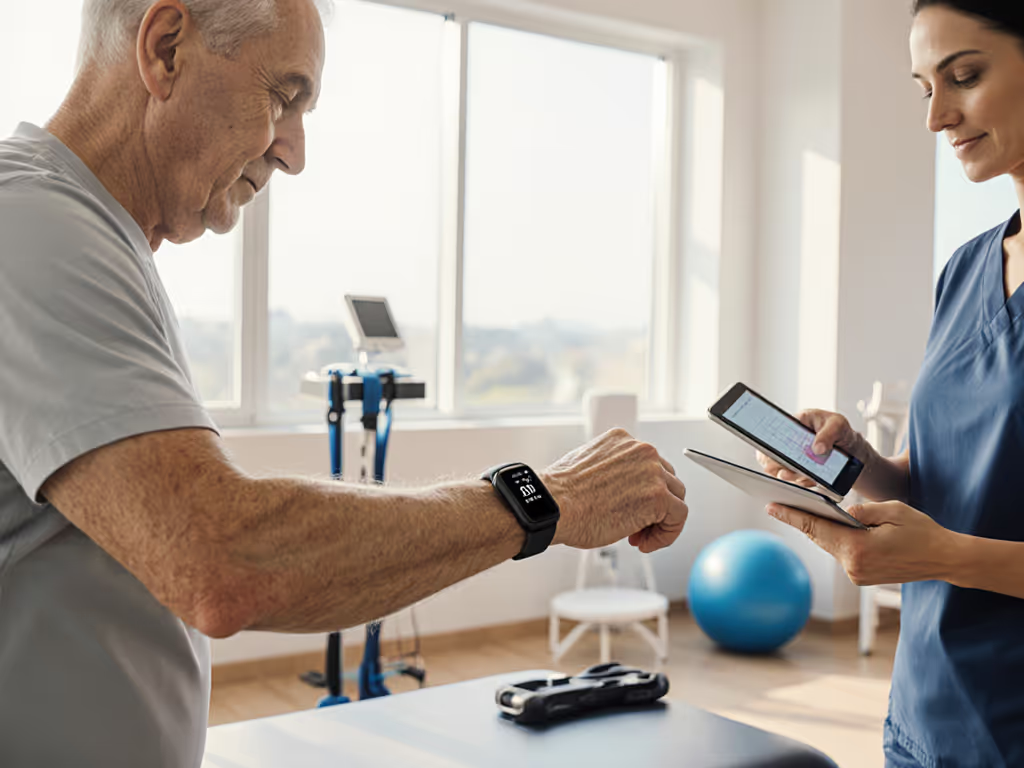
Therapy integration with trackers works when you and your therapist agree on what data matters to your goals. For practical routines that turn numbers into action, see our habit-building with fitness trackers guide. You're not asking the device to diagnose or treat anything. Instead, you're using it as a journal of sorts, a record that helps you spot patterns and test whether a change (earlier bedtime, weekly movement, a different routine) actually shifts how you feel.

How to use a tracker in therapy or coaching:

  1. Export or screenshot key metrics (weekly sleep average, HRV trend, activity consistency) and bring them to your session.
  2. Discuss patterns together: "I notice my mood lifts after two nights of 7+ hours of sleep. How does that align with what you're seeing in our talks?"
  3. Test a hypothesis: "Let's try a 10-minute wind-down every evening and see if HRV trends improve over three weeks."
  4. Avoid data dumping: Most therapists don't need your full dashboard. Bring the one or two metrics that connect to your current goal.

Make it doable daily by syncing your tracker to a shared note or app only during sessions, not obsessively between them.

therapist_and_patient_reviewing_wearable_health_data_on_tablet_in_calm_office_setting

Setting Up Your Tracker to Reduce Shame and Anxiety

Here's where the rubber meets the road. A fitness tracker for mental health must reduce friction and shame, not create it.

Notification adjustments:

  • Mute badges and daily congratulations prompts. They're noise.
  • Keep only one or two meaningful alerts (e.g., "Your HRV is below your 7-day average: consider an easy day").
  • Set vibrations to gentle, not buzzy; let it feel like a whisper, not a nag.

Goal settings:

  • Avoid streaks and daily "win" targets. Instead, set a rolling weekly target (e.g., "I'll move for 3 hours over the next 7 days"). Miss a day? The week resets, no guilt.
  • For mood tracking, skip perfection. Aim to log a quick mood check (1–5 scale) twice a week, not daily.

Privacy and defaults:

  • Review permissions: Disable sharing your location, sleep data, or stress metrics with apps you don't trust.
  • Export your data regularly to a local file. This keeps you in control and reminds you that the data is yours.

Dashboard simplification:

  • Remove metrics that don't connect to your goal. If you're tracking for mental wellness, you probably don't need advanced running cadence or climbing floors.
  • Keep your home screen to three to five key metrics: sleep, HRV (or resting HR), activity, and mood (if you log it manually).

For Shift Workers and Non-Traditional Schedules

The experience I mentioned (the nurse) highlights a real gap: most trackers assume a 9-to-5 sleep window. If you work nights, have an unpredictable schedule, or care for a baby or elder, your tracker will treat your actual rhythm as an anomaly. Get step-by-step adjustments in our night shift tracking guide.

Practical workarounds:

  • Adjust your tracker's timezone to match your sleep window, not your local clock. Sleep 10 p.m. to 6 a.m.? Set that as your sleep target, even if your location is different.
  • Use activity zones wisely: Log your "workday" as training time, so your device stops penalizing you for being up at 3 a.m. on alert.
  • Lower alert thresholds for recovery scores on days you know you're sleep-deprived. You don't need a reminder; you need permission to rest.

A Practical, Stepwise Setup Plan

Week 1: Baseline

  • Wear the tracker normally; don't change anything.
  • Log your mood once or twice (quick 1–5 scale, no narrative).
  • Note one or two activities, sleep times, and how you felt.

Week 2: Customize

  • Mute or disable all notifications except one you find genuinely helpful.
  • Adjust sleep and activity windows to match your real schedule.
  • Set a rolling weekly goal (not daily streaks).

Week 3-4: Observe

  • Let the data settle into a pattern.
  • On day 21, review: Which biometric trends correlate with your mood or energy? Did any notification actually help?
  • Adjust as needed.

Ongoing: Integrate

  • Check your tracker weekly (not daily) for trends.
  • If you work with a therapist, bring the one metric that matters most.
  • Export your data every month so you own it.

The Bottom Line: Consistency Beats Intensity

A fitness tracker is most useful when it fits your life, not the other way around. If your device is nudging you into shame, flooding you with meaningless alerts, or treating your unique body as a deviation, something is wrong with the setup, not you.

The goal isn't to optimize every metric. It's to notice patterns, test a change, and build sustainable habits, with a tool that supports rather than punishes.

Consistency beats intensity when the device fits your life.

Start small. Make it doable daily. In a few weeks, you'll have real data about what mood patterns correlate with sleep, stress, and rhythm (and that insight is worth far more than a perfect streak).

Related Articles