Fitness Trackers for Mental Health: Track Mood Patterns
10th May•9 min read

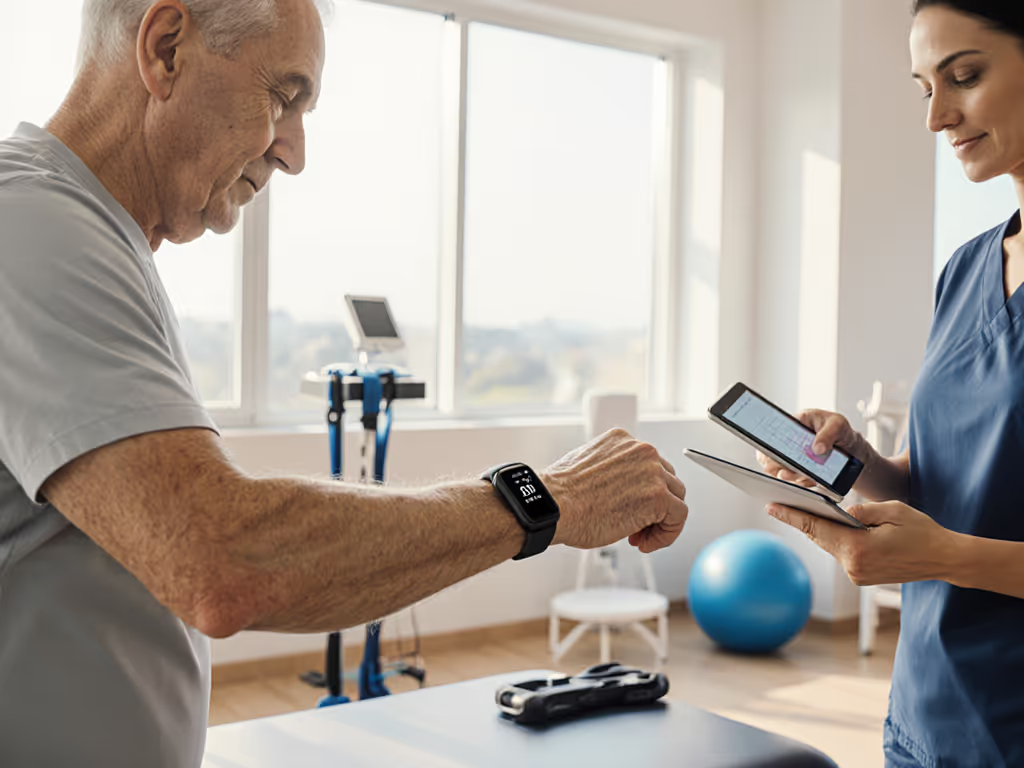
When researchers at Sutter Health deployed the PD Companion app for Parkinson's tracking, they prioritized HIPAA-compliant data flow, not glossy metrics. That's the difference between tools that monitor and tools that empower. Parkinson's fitness tracking done right merges clinical-grade neurological condition monitoring with ironclad exit options. Because if you can't leave your data intact, you've already paid too much.
I once lost two years of sleep-stage data when a "free" tracker retrofitted its privacy policy. Support's shrug taught me: Your health data isn't truly yours until export paths are carved in stone, not software terms. Below, I dissect Parkinson's tracking through a ledger lens, where lifetime costs include peace of mind.
General wearables optimize for step counts, not tremor vectors. For context on limitations, see our step counting accuracy breakdown. Darker skin tones, tattoos, and neuromuscular fluctuations trigger optical sensor errors that distort tremor tracking accuracy and gait analysis for Parkinson's. We’ve validated skin tone accuracy across diverse users to show how optical sensors behave outside the lab. A 2024 UC San Francisco study found smartphone-based AI systems reduced misdiagnosis rates by 40%, but only when validated against diverse movement patterns, not lab-perfect gaits.
Renting data is still paying, especially when symptoms fluctuate hourly.
Without Parkinson's-specific calibration, devices mistake medication-induced dyskinesia for progress. One study participant's "improved activity score" masked worsening bradykinesia because the algorithm didn't recognize slowed movement between tremors. Always verify: Does the tool track your symptom profile, or force you into its grid?
Forget the hype cycle. Parkinson's tracking requires:
The STAT-ON™ wearable study proved this: Continuous monitoring cut clinical costs by 22% not through fancy dashboards, but by giving neurologists objective, timestamped data streams. When gait analysis shows 17% increased stride variability at 2 PM daily, treatment adjustments stop being guesswork.
A tracker's sticker price is just the down payment. Before committing, review fitness tracker subscriptions to understand hidden long-term costs. Lifetime cost math for Parkinson's monitoring must include:
| Cost Factor | Risk if Ignored | Mitigation Check |
|---|---|---|
| Data lock-in | 83% of apps delete data after account closure | Export button test pre-signup |
| Subscription creep | "Basic" features like CSV export behind paywall | Document retention policy scan |
| Repair lifespan | <2yr battery cycles = data loss at critical points | Warranty transferability check |
| Interoperability tax | 3+ manual daily entries to sync with EHR | Apple Health/Google Fit API test |
Take the Apple Watch Series 11's PD Companion integration, it can export medication logs via HealthKit. But try exporting raw accelerometer data? You'll hit a wall unless you jailbreak.
That's why I demand: "Show me the exit before I enter."
Don't trust promises: audit these before starting any tracking:
When Sutter Health's pilot study launched, they mandated CSV exports for all gait data. That's why clinicians could model fall risks before incidents occurred. Meanwhile, a competing app's "premium" tier charged $15/month for the same data, a predatory tax on vulnerability.
Emerging tools like the UC San Francisco video analysis system prove Parkinson's symptom progression can be quantified objectively. But technology without ownership is theater. Every fluctuation in your symptom progression monitoring deserves tools that treat your data as your legacy, not a revenue stream.
Your actionable next step: Before adopting any tracker, run the 10-minute audit:
If it fails, you've just dodged a data prison sentence. Next, consolidate exports into a unified health dashboard so medication logs and symptom streams live in one place you control. Because in Parkinson's monitoring, renting data is still paying, with your autonomy.