Fitbit Inspire 4 Pro Review: Medical-Grade, Fair Price
6th May•12 min read
The Fitbit Versa 4 is a conditional buy: a comfortable, easy-to-read everyday smartwatch with GPS-supported exercise, sleep tools, notifications, and a manufacturer-rated 6+ day battery life—but not a strong choice for precise training data.
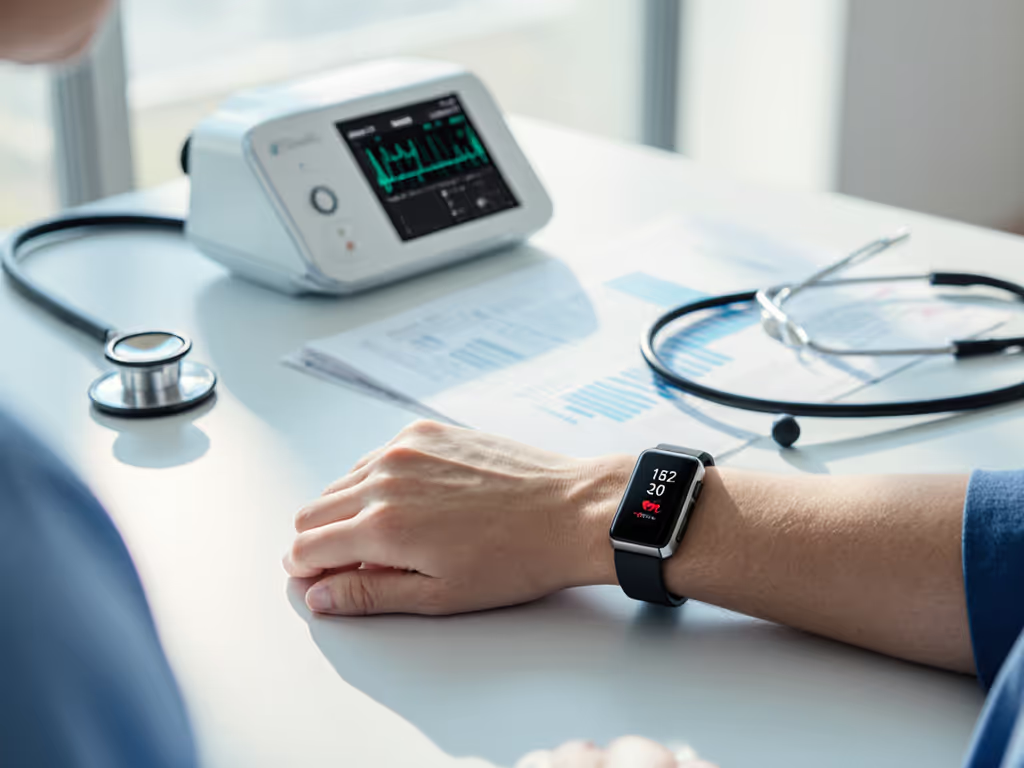
Important: Fitbit says the watch’s health and wellness data is not intended as medical or scientific data.
This Fitbit Versa 4 review is for the buyer who wants a straightforward wrist-based tracker for sleep, walks, workouts, and notifications (not a logo-driven upgrade). The Fitbit Versa 4 combines a color AMOLED touchscreen, a physical button, phone-linked notifications, sleep tools, and GPS exercise features in one watch. The practical question is whether its results and ongoing setup fit your routine better than leaving your current watch alone (or choosing a ring fitness tracker for an entirely different wear style).
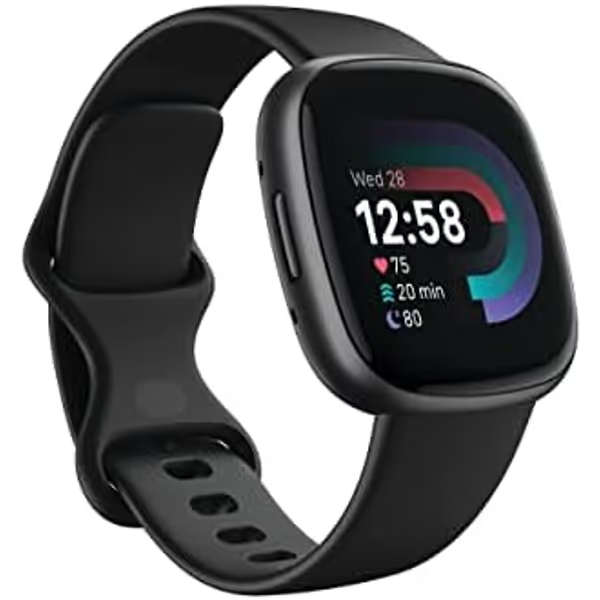
The short answer: the Versa 4 is a conditional buy, not an automatic recommendation. It has a comfortable-looking, wide display; independently tested distance precision; a manufacturer-rated battery life of 6+ days; and enough everyday smartwatch features to reduce how often you need to reach for your phone. But one independent test also found undercounted steps, slow heart-rate response during workouts, and imperfect sleep-event timing. Those trade-offs matter more than a long feature list.
I approach this as a right-sizing decision. In my own household, running a premium ecosystem alongside two budget ones created more morning friction than useful insight. The fix was not buying the most expensive device; it was matching the tracker to the job, the wrist, and the recurring cost. Switching costs matter as much as features on paper.
Before comparing screens or workout modes, name the one outcome you will use at least four days a week. The Versa 4 makes the most sense when that outcome is everyday awareness rather than high-stakes training data.
The evidence supports the Versa 4 most clearly for someone who wants:
Fitbit's manual identifies setup through the Fitbit app on a compatible iPhone, iPad, or Android phone. Check your exact phone's current compatibility before paying, because app and phone requirements can change.
The case weakens if your purchase depends on precise real-time exertion data. In a June 2023 independent test, the heart-rate monitor reportedly took more than 30 seconds to adjust and missed workout heart-rate spikes. That is a meaningful drawback for interval sessions, hard cardio, or any training plan built around rapid heart-rate changes.
Likewise, do not buy it primarily to chase a perfect step-counting accuracy total. The same test found the Versa 4's step count consistently fell short of actual counts. If your movement includes wheelchair propulsion, stroller pushing, or other motion patterns that already challenge wrist trackers, that limitation should make you especially cautious (not more determined to hit a daily streak).
The best tracker is the one that changes a useful behavior without asking you to pretend every number is exact.
The retailer listing advertises built-in GPS, a workout intensity map, more than 40 exercise modes, and automatic exercise tracking. It also claims up to 12 hours with continuous GPS, while noting that actual results vary with use.
That sounds broad, so narrow it to your decision:
This is the Versa 4's strongest performance area in the available independent evidence. Testers found its distance precision accurate. For a person whose real routine is neighborhood walks, jogs, or route-based outdoor exercise, that is more useful than an abstract spec-sheet promise.
Treat the route and distance record as potentially useful, but treat wrist heart rate cautiously. A heart-rate reading that is slow to react can make live zones and post-workout intensity summaries less dependable when your effort changes quickly. The watch still records information; the question is whether that information is precise enough for your decisions.
A sensible buying rule is simple:
Fitbit rates the Versa 4 at 6+ days of battery life, with actual life varying by use. The manual also says 12 minutes of charging can provide 24 hours of battery life, while a full charge takes roughly one to two hours. Those are convenient claims for a device intended for overnight wear and daytime exercise.
However, do not read "six-plus days" as a guarantee for every setup. The manual specifically notes that enabling the always-on display requires more frequent charging. Continuous GPS use is also a more demanding mode than ordinary daily wear. If you plan to use GPS often, build a charging habit around your week rather than assuming a single headline number will hold.
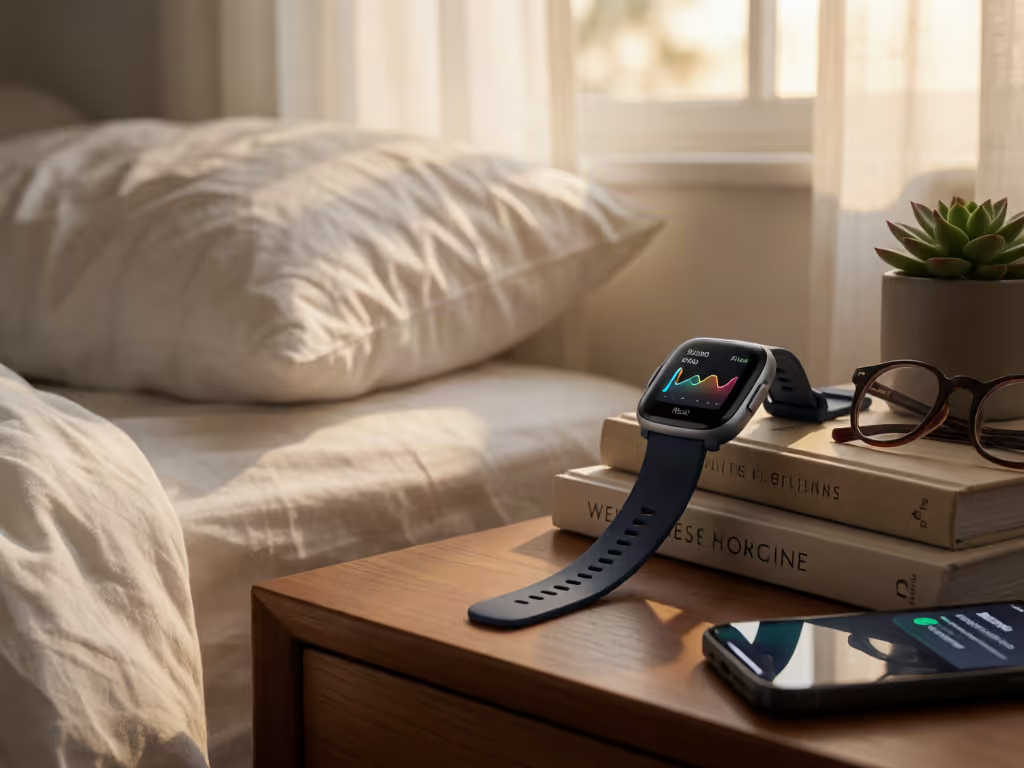
Fitbit Versa 4 sleep tracking includes daily sleep stages, a Sleep Score, a smart wake alarm, and do-not-disturb mode according to the retailer listing. The manual also has a dedicated sleep-tracking section. On paper, that is the right set of tools for people trying to notice sleep patterns without wearing a larger full-featured smartwatch overnight.
The critical distinction is between useful sleep-tracking trends and literal truth.
In the independent 2023 test, the Versa 4 captured major wake-ups and sleep-duration insights, but it sometimes misaligned sleep hours and logged false wake-ups. That makes it better suited to questions such as, "Has my sleep window shifted over several weeks?" than, "Was I awake at exactly this minute?"
Use this three-part filter before changing anything in your routine:
This matters for shift workers, caregivers, and new parents in particular. An algorithmic score can organize data, but it cannot fully understand a fragmented or nontraditional schedule. Fitbit also states that the Versa 4's data is not intended as medical or scientific data. Treat sleep, heart-rate, and related wellness outputs accordingly.
A sleep feature has little value if the watch spends the night on a charger. One independent tester described the display as wide, clean, and clear, the touch response as fluid, and the watch's thin, wide profile as comfortable. Comfort remains personal: skin sensitivity, wrist size, band tension, tattoos, sweat, and sleeping position can all change both feel and sensor contact.
A watch that shifts during exercise or sleep can be uncomfortable and can compromise the practical usefulness of any wrist-sensor reading.
The Versa 4 has a color AMOLED touchscreen and one physical button. The retailer listing also advertises on-wrist Bluetooth calls, texts, and phone notifications. These are meaningful Fitbit smartwatch features if your goal is simple: see what matters without repeatedly pulling out your phone.
There are conditions. Calls, texts, and notification behavior can vary by phone platform, connected-phone status, region, and software. Set it up with your own phone as soon as it arrives, then test the notifications that matter: calls from key contacts, calendar alerts, and only the apps you truly need.
This is how you keep a health watch from becoming a tiny anxiety machine. A screen that is easy to read is valuable; a screen that asks for your attention all day is not.
The retailer listing also mentions Premium-related benefits, but its subscription trial information is inconsistent: one part says three months while another says six months for eligible new users under conditions. Do not price the watch as though a particular trial length is guaranteed. Confirm the current offer, renewal terms, region, and what remains useful without a subscription before checkout.
There is no current price, broad availability picture, or model-wide discontinuation confirmation in the available evidence. One retailer's Platinum version was listed as sold out when checked, but that does not prove the Versa 4 is discontinued everywhere.
That uncertainty means the right decision is price-sensitive. Do not use an old launch price or a vague "sale" label as your benchmark. Instead, calculate your personal value at the price you actually see.
That final question is not pessimism; it is budgeting. A lower upfront purchase that becomes unused after two weeks is worse value than a slightly higher purchase you actually wear. Conversely, paying for advanced-looking features you do not trust is not an upgrade.
A ring fitness tracker may appeal if sleeping in a wristwatch is the deal-breaker, but it is a different form factor and should be evaluated separately rather than treated as a direct spec-for-spec replacement. Choose the device category based on when you will wear it, not on the pressure to own every metric.
Once the Versa 4 is set up, do not immediately judge it from one workout or one sleep score. Run a practical seven-day trial.
If the answer is yes, simplify your dashboard and keep the metrics that serve your behavior, using consistent tracker habits rather than chasing every available number. If the answer is no, use the return path rather than forcing yourself into sunk-cost guilt. Switch smart, not hard.
The clearest drawbacks in the available independent test were step counts that fell short of actual counts, heart-rate readings that were slow to adjust and missed workout spikes, and sleep timing that sometimes included false wake-ups or misaligned hours. The always-on display also requires more frequent charging.
The retailer listing advertises on-wrist Bluetooth calls, texts, and phone notifications. Functionality depends on a compatible connected phone, the Fitbit app, software, and potentially your market, so test the exact behavior with your phone after setup.
There is not enough evidence here to say that. One Platinum retailer listing was sold out at the time it was checked, but a sold-out color and seller listing is not proof of model-wide discontinuation. Check current stock and return terms from the seller you are considering.
The Fitbit Versa 4 is worth considering if you want a comfortable, easy-to-read everyday smartwatch with GPS-supported exercise tools, useful sleep-pattern context, notifications, and a manufacturer-rated 6+ day battery life. Its best-supported practical strengths are display comfort and distance precision, not flawless fitness measurement.
Pass if you need responsive wrist heart rate for intense workouts, exact step totals, or sleep data you can treat as definitive. And because current price, availability, and subscription terms were not established here, only buy when the seller's price makes sense for the limitations you are accepting.
For the right routine, the Versa 4 can be a sensible right-size: enough watch to support healthier habits, without pretending that every wrist metric is a verdict on your body.