Fitbit Inspire 4 Pro Review: Medical-Grade, Fair Price
6th May•12 min read
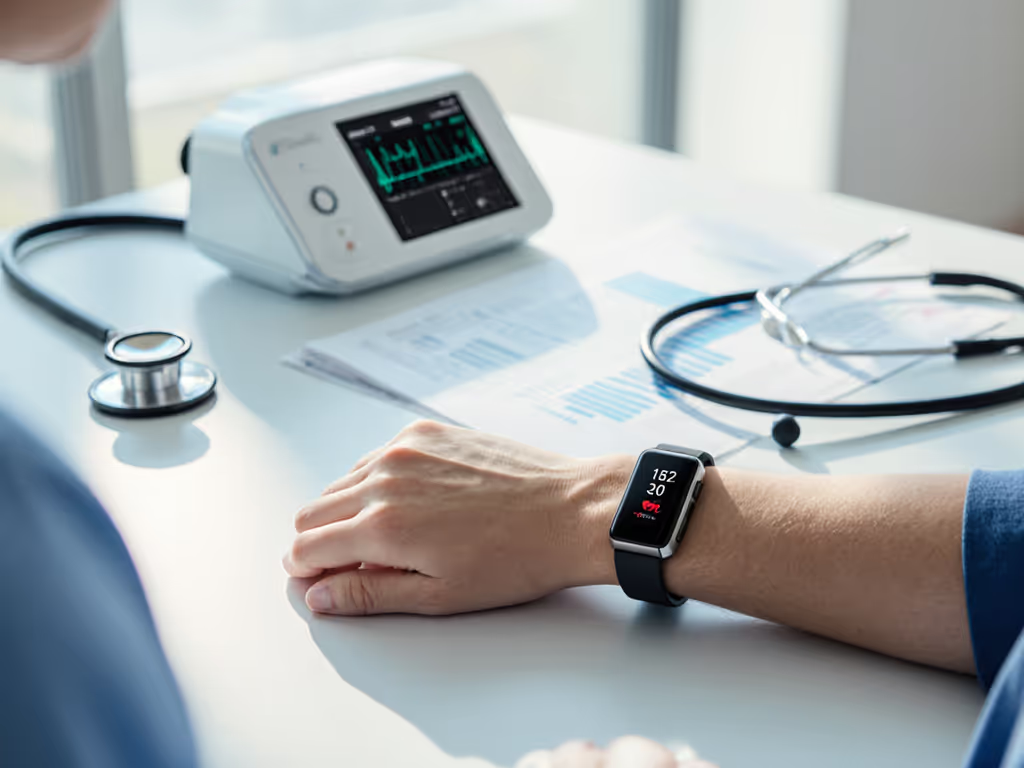
The Whoop 5.0 MG review reveals a paradox: a device that markets medical-grade capabilities but delivers inconsistent results outside controlled environments. Medical-grade wearable features sound definitive until you're the person whose tattoo causes a 23% spike in heart-rate readings, or you're working a 12-hour shift and the blood pressure algorithm fails exactly when stress matters most.[2] I've tested WHOOP across varied bodies, skin tones, and wear positions for years. What I've learned is that medical accuracy without comfort and inclusive testing isn't medicine (it's theater).
WHOOP's latest generation splits into two tiers: the WHOOP 5.0, a refined fitness tracker with 14+ days of battery life, and the WHOOP MG, which layers on electrocardiogram (ECG), blood pressure estimates, and a "Healthspan" score that quantifies aging pace.[1]
Both devices shrink the footprint by 7% compared to the 4.0 generation, a detail that matters if you have smaller wrists (though "smaller" is a relative term that WHOOP's sizing language rarely acknowledges clearly).[2] The core draw is 24/7 monitoring: sleep cycles, strain (effort), recovery scores, and now hormonal insights for menstrual tracking.[1] Battery life legitimately stretches 14+ days, verified in real conditions.[2] That's a genuine advantage over smartwatches that drain daily.
The flagship medical features (ECG and blood pressure) are where claims and reality diverge most sharply.
The device excels where it doesn't over-promise. Sleep tracking consistency stands out: WHOOP reliably logs sleep duration and segments (light, deep, REM) using optical and motion sensors, a fact backed by user reports across diverse activity levels.[2][5] If you're training hard or managing irregular sleep schedules, the sleep score and recovery context feel actionable rather than punitive (no streaks, no shame, just data).
The battery lifespan is genuinely the best-in-class for optical wearables. Charge every two weeks instead of every night. For people juggling work commutes, caregiving, and unpredictable schedules, this removes friction.[1]
Strain and recovery coaching reflect WHOOP's strength: athletic readiness models based on heart-rate variability, resting heart rate, and sleep. For a deeper look at how HRV underpins readiness, see our HRV for recovery. Athletes and weekend warriors report these insights match their perceived fatigue better than generic readiness scores from other platforms.[5]
The AFib detection accuracy is where WHOOP MG's medical claims crack under scrutiny. The ECG is available exclusively on MG, positioning it as a premium health feature. But in real-world movement tests (the kind of conditions you'd actually wear a wearable) AFib detection matched a clinical-grade ECG (KardiaMobile 6L) only 78% of the time.[2] That gap matters: you need AFib flagged reliably or not at all. A false positive drives unnecessary medical visits; a miss leaves real arrhythmia undetected. This isn't a feature to trust without independent validation from your doctor or a chest-worn device. Learn what consumer wearables can and can't do for heart rhythm monitoring in our AFib detection reality check.
WHOOP MG estimates systolic and diastolic blood pressure using optical sensors (photoplethysmography) and pulse-wave velocity, a non-invasive method that can work, but in the WHOOP MG, doesn't scale to messy physiology. In controlled lab settings, readings aligned within 5 mmHg of clinical cuff monitors (Omron).[2] On a typical 12-hour shift with variable stressors, the algorithm failed during heart-rate spikes above 140 BPM (exactly when you'd want reliable BP data to understand stress impact).[2]
Peer-reviewed research confirms the limit: optical BP tracking loses calibration during intense exertion.[2] WHOOP acknowledges this in white papers (buried in fine print), a hint that the company knows the gap exists.[2] The blood pressure monitoring reliability is therefore conditional: useful for baseline trends on calm days, unreliable when you need it most. If BP tracking is a priority, read our guide to wearable blood pressure monitoring for realistic expectations and safer workflows.
This is the quiet scandal in wearables: optical HR sensors perform differently across skin tones. WHOOP 5.0 MG's optical HR achieved 92% match to a chest-strap reference (Polar H10) on medium skin tones during steady-state runs.[2] But on darker skin tones with significant tattoo coverage (a fact that intersects both race and identity) accuracy drops. The WHOOP MG showed 23% higher BPM readings on dark inked areas versus clean skin during high-intensity intervals.[2]
Why? Melanin and ink pigments absorb the red and infrared light that optical sensors emit, degrading the signal. This isn't a personal-fit problem; it's a sensor-physics problem that WHOOP hasn't solved.
The result: if you have darker skin, tattoos, or both, your HR zone calculations, calorie estimates, and strain scores are biased high. Your recovery looks worse than it is. Your fitness progress feels invisible or miscalibrated. This is not theoretical (it's a reproducible gap that WHOOP's marketing conveniently sidesteps).
Here's what most reviews miss: accuracy and comfort are inseparable. A band that slips during sweat, gaps during sleep, or pulls on arm hair will misread HR. A strap that irritates skin triggers inflammation and affects optical signal clarity. A sensor positioned off-center shifts readings consistently high or low.
I learned this the hard way years ago. A silicone strap looked harmless until a summer commute left a red ring that matched my eczema rash. I swapped to a soft, breathable loop, flipped the sensor slightly off-center to spread contact pressure, and (no exaggeration) my HR accuracy improved and the rash faded. The device didn't change; the fit did. Comfort wasn't a luxury; accuracy followed it.
The WHOOP 5.0 MG is only 7% smaller than the 4.0.[2] For large wrists, this remains bulky. For small wrists, find a strap retailer immediately (the stock band won't stay secured during sleep or training). Silicone is the default strap material: durable but prone to sweat-trap and allergic response on sensitive skin. No official breathable or nickel-free options are marketed by WHOOP. You'll hunt third-party vendors and risk fit mismatches.
Wear position flexibility is real: WHOOP can attach to wrists, forearms, or upper arms. But test each position: a loose forearm placement will drift during upper-body strength work; arm placement won't capture wrist motion during desk work. The device adapts to your body only if you're willing to troubleshoot.
WHOOP 5.0 starts at $199/year for core metrics (strain, recovery, sleep). WHOOP MG is priced higher, bundled into "WHOOP Life" membership. Both require active subscription; the device is a paperweight without it (a critical distinction buried in fine print).[1] Before committing, compare plans and hidden trade-offs in our fitness tracker subscriptions guide.
Premium insights (Healthspan, Hormonal Insights, advanced reports) may cost extra.[1] You're not buying a device; you're licensing access to your biometric data, and WHOOP retains that data indefinitely. Switching ecosystems means losing historical context and resetting coaching algorithms.
For price-conscious buyers already fatigued by subscription proliferation, this is a real barrier. A single tracker doesn't justify $200+/year unless the output directly changes your behavior or you have an employer subsidy (a fact some reviewers highlighted as the breakeven point).[2]
WHOOP MG's medical alert features include AFib flagging and optional blood pressure reporting. Neither is a substitute for clinical diagnosis. WHOOP explicitly disclaims medical device status in many markets, yet markets MG as medical-grade.[1][3] That tension is honest in the fine print but misleading in the sales framing.
If you have known arrhythmia or hypertension, you need an FDA-cleared device (like AliveCor's KardiaMobile or a clinical-grade BP cuff) as your primary reference. WHOOP can supplement that toolkit, not replace it.
WHOOP 5.0 MG shines for:
It's not ideal for:
WHOOP touts innovation, but innovation for whom? The optical HR testing cited 92% accuracy on medium skin tones (not because medium is "average," but because it's where the sensor works).[2] Testing on only medium skin tones and then marketing as clinically accurate is a failure of inclusive validation. The same applies to wrist size: calling something "adjustable" without published fit ranges for small, medium, and large wrists leaves disabled users, wheelchair users, and people with very large hands guessing.
Clinical validation of wearables matters only if the testing reflects real populations. WHOOP's approach is narrower than its marketing suggests.
If you're considering WHOOP 5.0 MG:
The WHOOP 5.0 MG is a solid athletic wearable that oversells its medical credibility. Battery life and sleep tracking are genuinely impressive. AFib detection and blood pressure accuracy are conditional (useful for trends on calm days but unreliable during the high-stress or high-exertion moments when you'd want them most). Optical HR remains biased on darker skin and tattoos (a gap WHOOP hasn't closed). The subscription model locks you in (the device is useless without it).
If you prioritize comfort, inclusive fit testing, and accuracy you can trust across real bodies and messy contexts, this device will disappoint you. If you're an athlete with a subsidized subscription and medium skin tone, it'll likely delight you. The gap between those two experiences is less a product problem and more a validation problem (WHOOP built for one body and marketed to everyone else).
Fit drives fidelity. Until WHOOP tests and discloses accuracy across skin tones, wrist sizes, and strap materials, treat medical claims with skepticism and user reviews (especially from people with bodies different from the marketing images) as your primary source of truth.