
Tracker Technology & History
Top Articles

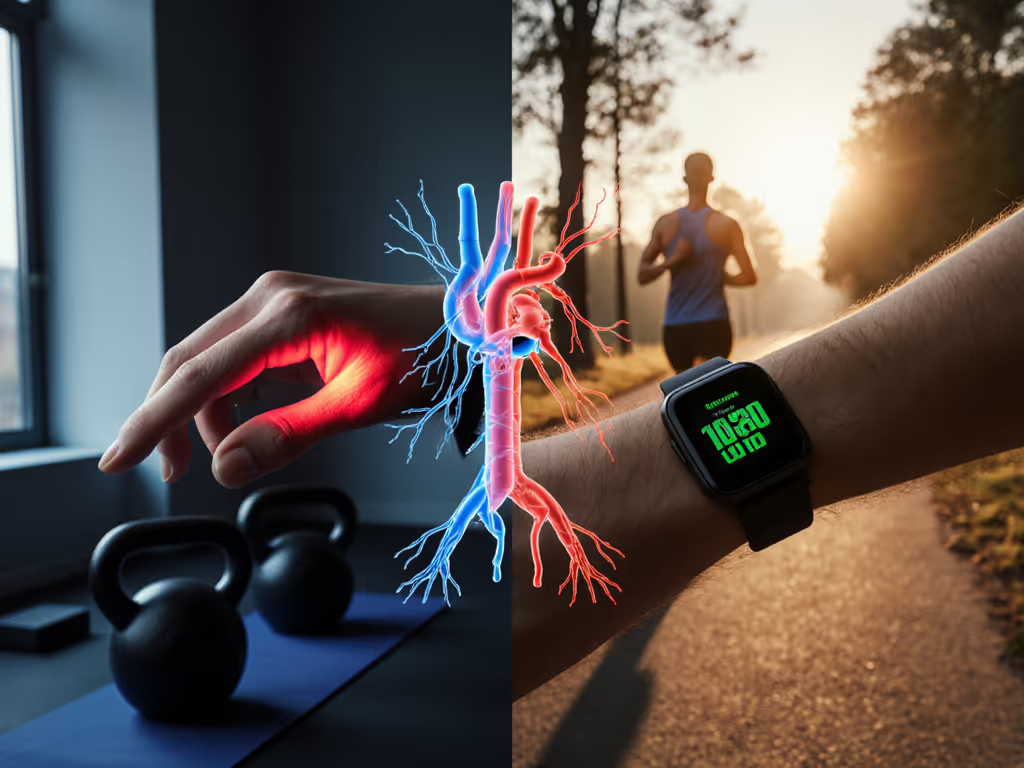
Smart Ring HR Accuracy: Finger Sensors vs Wrist Trackers
Understand why finger sensors can outperform wrists on paper but falter with motion, leading to undercounted peaks in workouts. Learn when to trust a ring versus switch to a wrist tracker or chest strap, with fit, placement, and cross-check tips for dependable heart rate tracking.
Real-World Step Counting Accuracy: Trackers Tested
Learn how and why trackers miscount steps in everyday life - and how that distorts calories, sleep, and readiness - then use simple tests, calibration, and placement tweaks to improve accuracy. Use the scenario-based guide to choose the right device or placement for your routine and budget, prioritizing outcomes per dollar and data portability.
History of Fitness Trackers: Accuracy Through the Ages
See how accuracy - not features - has shaped the real story of fitness trackers, from pedometers to GPS and wrist-based sensors. Learn the most common real-world errors, how to assess claims with a field-tested checklist, and what advances could make measurements more trustworthy.
Explore Other Topics
Device Comparisons & Versus Guides
Side-by-side comparisons of popular fitness trackers by ecosystem, sport, health features, and overall value to help you choose between specific models.

Best Picks & Buying Guides
Curated recommendations tailored to needs, activities, demographics, and budgets—find the right tracker for swimming, seniors, women’s health, battery life, weight loss, and affordable options.

Health Metrics & How to Use Them
Plain-English explanations of key health metrics (sleep, stress, VO2 Max, heart rate, ECG/AFib, blood pressure estimation) and practical guides for turning tracker data into actionable habits and improvements.
In-Depth Reviews
Detailed, model-specific reviews evaluating real-world performance, accuracy, features (e.g., AMOLED displays, GPS, battery life), and overall value to help decide on a specific tracker.