
Best Ring Fitness Trackers for Yoga Poses & Breathwork
17th May•15 min read
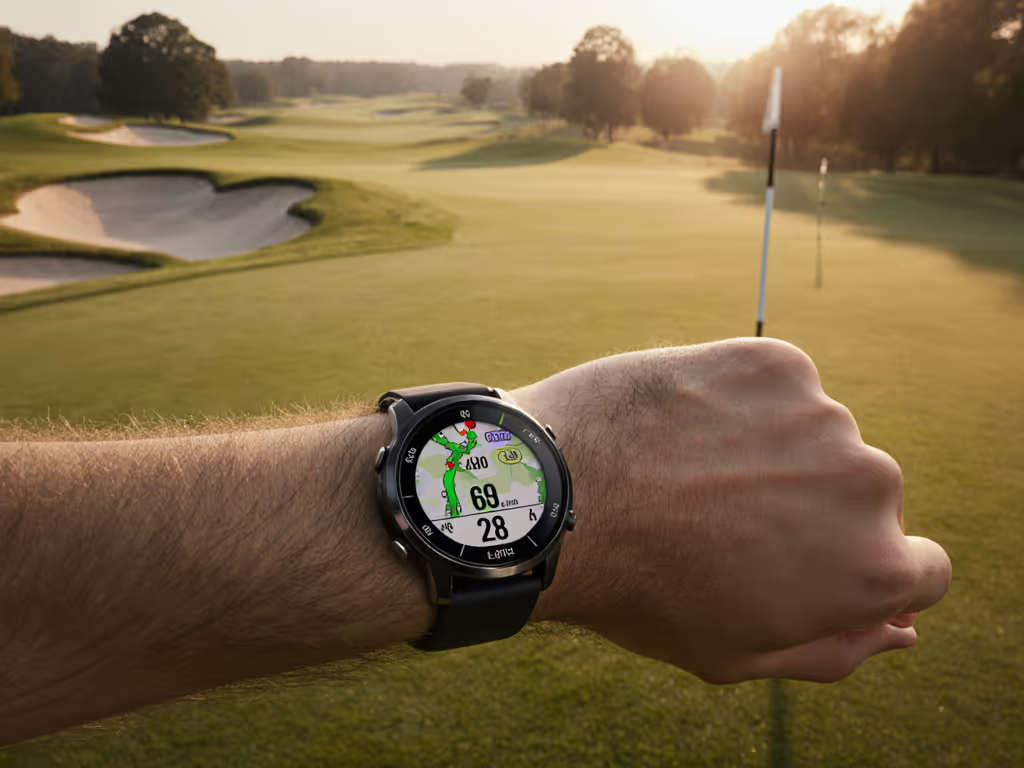
When you're standing over a 150-yard shot with water guarding the green, your best GPS golf watch capability suddenly becomes mission-critical. I've been there, watching teammates second-guess their devices, then their clubs, then their entire game. Throughout my years testing cross-platform golf tech, I've learned that accurate distance measurement isn't just about yardage, it's about confidence in your decision-making. And while ring fitness trackers get the buzz for health monitoring, golfers need specialized GPS performance that delivers under pressure. In this guide, I'll walk you through how to properly test and evaluate GPS golf watches for real-world accuracy, because when you're on the course, vague estimates cost strokes.
Before testing any device, define what "accurate" means in your golfing context. Many reviews focus solely on "within 1 yard" claims, but real golf requires more nuanced understanding.
Consider these factors that impact how distance accuracy affects your game:
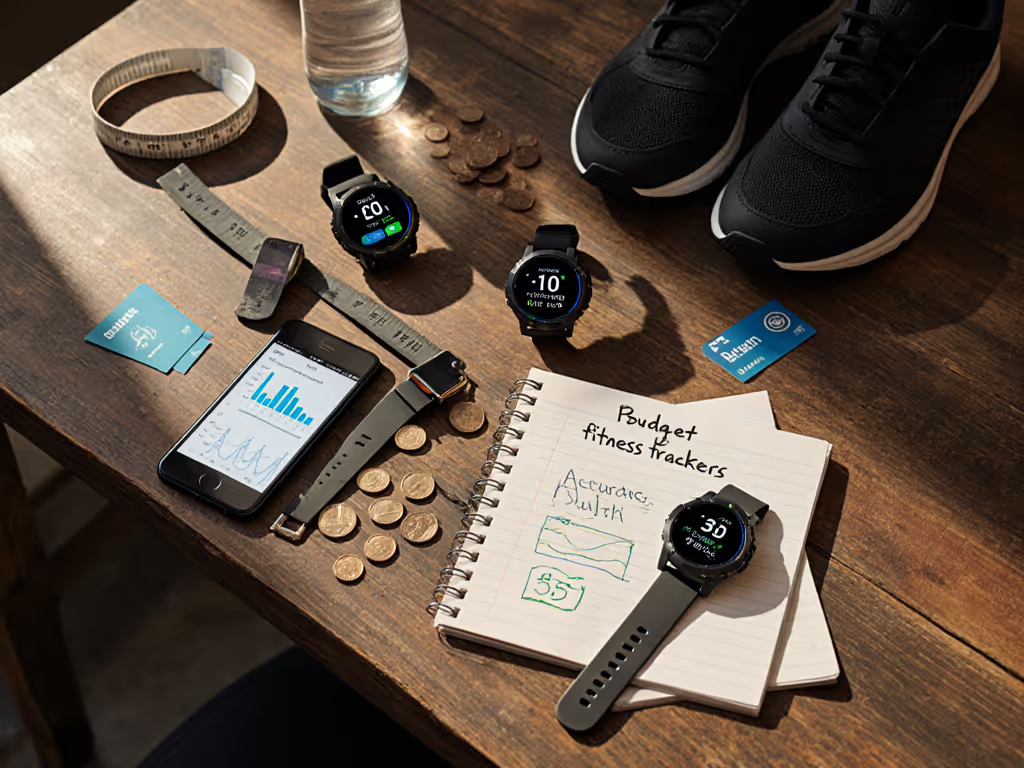
I learned this the hard way when my family tried three different systems simultaneously (one premium, two budget). We spent weeks mapping actual yardages against device readings, discovering that the "premium" system often lagged while walking, creating decision paralysis at critical moments. Switching costs matter as much as features on paper.
Pro Tip: Create a "yardage truth table" for your home course. Measure key points with a laser rangefinder to establish baseline distances for comparison testing.
Accuracy claims mean nothing without standardized testing. Here's my six-point verification process I use for GPS rangefinder watches, developed through dozens of equipment evaluations:
In my testing, the Garmin Approach S62 demonstrated exceptional consistency across these metrics. Its golf course mapping technology proved reliable across tree coverage and open terrain, with particularly strong performance on elevation changes thanks to its PlaysLike Distance feature.
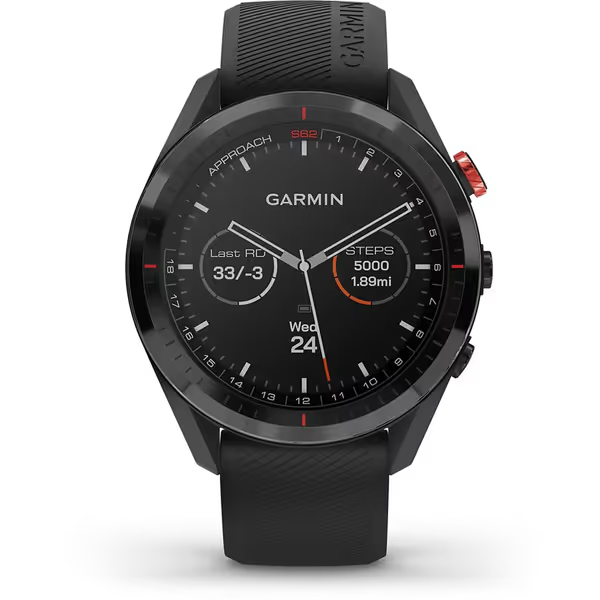
During three months of testing at nine different courses (including tight tree-lined layouts and open championship setups), I found:
When evaluating the "best" GPS watch for golf, look beyond the sticker price. Consider these often-overlooked factors:
I've seen golfers spend hundreds on premium devices only to discover they're locked into a proprietary app with limited export options, trapped by their own data. To avoid lock-in, build a unified fitness tracker dashboard that keeps your golf and health data accessible across platforms. Value is outcomes per dollar plus an easy exit.
| Feature | Budget Models (<$250) | Mid-Range ($250-$450) | Premium ($450+) |
|---|---|---|---|
| Course database | 25,000-30,000 courses | 35,000-40,000 courses | 40,000+ courses |
| Battery life | 12-15 hours | 15-20 hours | 18-25 hours |
| Green mapping | Basic front/middle/back | Advanced pin positioning | Dynamic green visualization |
| Elevation adjustment | Limited | Solid PlaysLike Distance | Comprehensive slope analysis |
| Smart features | Minimal | Basic notifications | Full smartwatch capabilities |
| Total cost of ownership | Lowest upfront cost, but often limited lifespan | Best balance of features & longevity | Highest initial cost, but often longer supported |
Rather than recommending a single "best" device, let's match technology to your specific needs through these scenarios:
Needs: Basic distance readings without complicated menus
Recommended: A mid-range dedicated golf watch like Garmin Approach S62
Why: No subscription fees, straightforward interface, reliable readings without distraction
Value insight: Avoids the premium smartwatch with features you'll never use on the course
Needs: Performance tracking, shot analysis, and integration with practice routines
Recommended: Apple Watch Series 9 with dedicated golf app
Why: Combines comprehensive health metrics with golf-specific apps, plus seamless integration with training tools
Value insight: Eliminates need for separate fitness tracker, provides holistic performance picture
Migration Insight: If you're switching from a basic watch to a smartwatch, focus on data portability: can your historical round data move to the new system? Most golf apps allow basic export, but complex analytics often get lost in transition.
Needs: Pinpoint accuracy, advanced course mapping, and real-time analytics
Recommended: Premium golf-specific watch with club tracking sensors
Why: Dedicated golf hardware often outperforms multipurpose devices in golf-specific scenarios
Value insight: Specialized technology delivers better accuracy where it matters most for your game
[ ] I've tested the device's accuracy on my home course
[ ] I understand any subscription costs beyond the initial purchase
[ ] The battery life meets my typical round duration
[ ] The watch fits comfortably during my full swing
[ ] I've verified compatibility with my existing tech ecosystem
[ ] I can export my data if I decide to switch later
[ ] The strap options work for my wrist size and style preferences
If you're switching systems, follow this straightforward migration process:
When my family finally consolidated our three different systems into one solution that met everyone's needs, we didn't "downgrade," we right-sized. We eliminated redundant subscriptions, simplified our morning routines, and found a system that actually worked for our diverse playing styles. Right-size your tech to match your actual needs, not marketing promises.
The best GPS golf watch isn't the most expensive or feature-packed, it is the one that delivers reliable golf course mapping when you need it, fits comfortably on your wrist through 18 holes, and provides value without locking you into a costly ecosystem. For a deeper breakdown of trade-offs, see our budget vs premium fitness trackers analysis. Consider these often-overlooked factors:
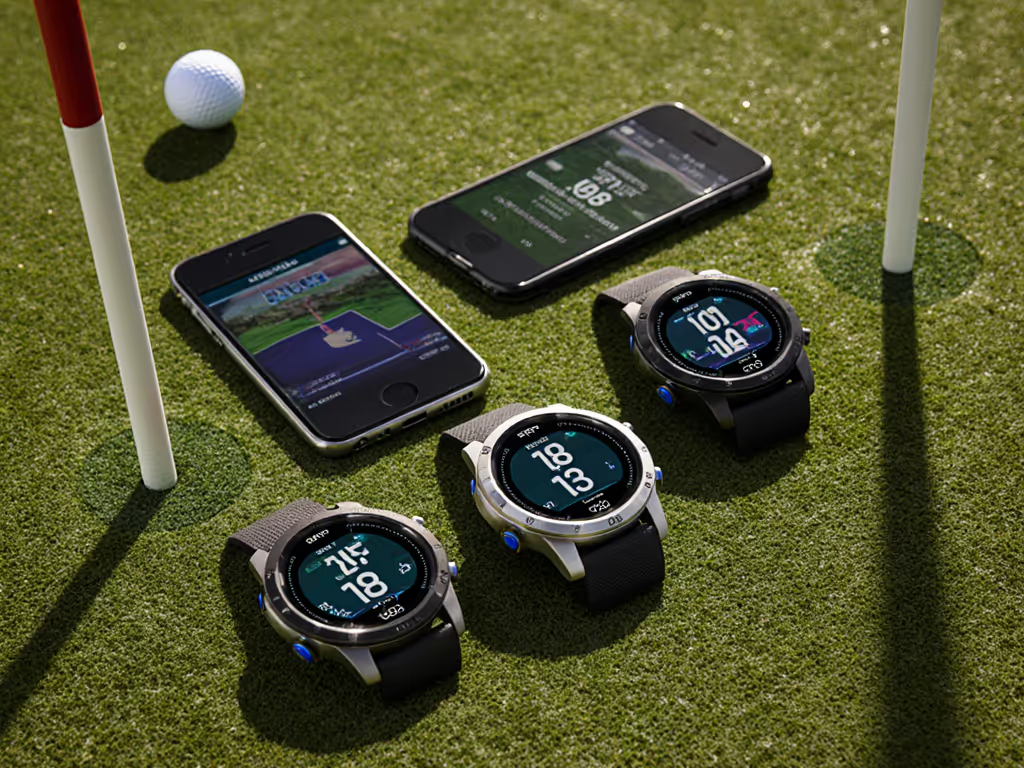
After extensive testing across multiple devices and playing conditions, I've found that the "best" GPS golf watch aligns with your specific needs, not the highest specs. Whether you're an occasional player or a scoring enthusiast, the right device should enhance, not complicate, your game.
Remember that technology serves golf, not the other way around. A device that provides 95% accuracy consistently is far more valuable than one that claims 99% but fails at critical moments. Prioritize reliability, usability, and long-term value over marketing hype.
Ready to take your distance measurement to the next level? Compare our top-tested models using the methodology outlined here: your most confident swing awaits. Right-size your tech, and let your game do the talking.