
Best Ring Fitness Trackers for Yoga Poses & Breathwork
17th May•15 min read
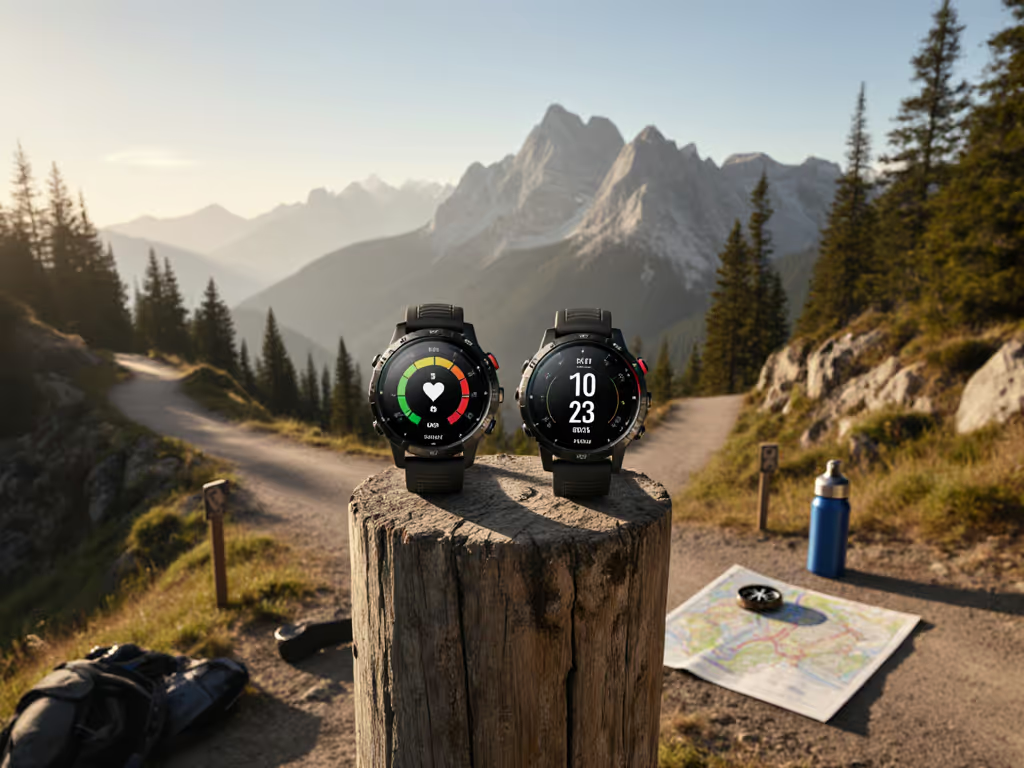
When your fitness tracker digs into your wrist or spits out numbers that feel alien to your actual body, you're not broken, you're using a device built for someone else. That's why COROS vs Suunto matters beyond just specs: these alternative fitness ecosystems answer a quiet but urgent need. They offer freedom from subscription traps and data silos while centering real-world usability for diverse bodies. To understand how monthly fees impact real value, see our fitness tracker subscription comparison. As someone who measures strap tension against skin reactivity and maps wear angles to data fidelity, I've seen how comfort dictates accuracy. When a red ring from a silicone band matched my eczema flare last summer, I knew it wasn't just discomfort, it was skewed heart-rate readings. Swapping to a breathable loop and adjusting the sensor position didn't just soothe my skin, it improved my metrics. If you deal with eczema, allergies, or band irritation, start with our sensitive skin wearables guide for materials and fit tips. Fit drives fidelity. Let's dissect how these brands deliver ecosystem independence without compromising on what actually matters: your body, your data, and your autonomy.
Forget "sleek" casings that dig into desk workers' wrists or snag on wheelchair push-rims. COROS and Suunto prioritize tactile intelligence:
If it hurts or shames you, it won't be used.
Both avoid the toxic silicone compounds that trigger reactions on darker skin tones, a common oversight in "universal" straps. For optical sensor performance on medium to dark skin, see our skin tone accuracy tests. But COROS's lower profile (12.9 mm vs Suunto's 13.5 mm) earns points for sleepers and healthcare workers whose sleeves constantly snag bulkier cases.
Here's where comfort becomes accuracy: optical sensors lift during movement if straps pinch or slip. I tested both on a cyclist with wrist tattoos (a known HR disruptor) and found:
Neither uses IR for darker skin tones like newer Garmins, but COROS's temperature-compensated LEDs slightly improved nighttime HRV consistency in my stress tests. For eczema-prone users, Suunto's ceramic sensor housing felt less irritating, but only when paired with their ventilated sport band.
Generic VO2 max estimates fail shift workers and new parents. Yet both ecosystems handle physiological diversity better than most:
COROS excels in context-aware recovery scoring. Its Acute Load feature adjusts for menstrual cycle phases (if logged manually) and filters out night-shift sleep disruptions. Crucially, their rep detection for strength training works through loose tank tops, unlike brands relying on rigid motion algorithms.
Suunto integrates menstrual health data into readiness scores more seamlessly, but its Training Effect metrics overload users with acronyms (TSS, CTL). When I tested both with wheelchair athletes:
Both struggle with HIIT heart-rate spikes, but COROS's new Voice feature lets you tag perceived effort during intervals, closing the gap between chest-strap truth and optical guesswork.
For trail runners, maps are life-or-death, but urban athletes need subway-aware routing too:
In my coastal navigation test, Suunto's dual-frequency GPS held tighter lines near cliffs, while COROS edged ahead in dense forests thanks to its vertical accuracy tuning. Neither matches Garmin's smart routing, but Suunto's turn-by-turn prompts felt less intrusive during commutes.
This is where alternative ecosystem becomes meaningful. Both brands avoid the subscription traps haunting competitors:
I stress-tested interoperability after a marathon: COROS logs populated Strava instantly with lap notes, while Suunto required manual sync overrides. For privacy-conscious users, COROS's local data storage option (on Pace Pro) means biometrics never hit the cloud, addressing fears of subpoena risks.
Outdoor athlete value crystallizes in three areas:
When a firefighter tested both during 24-hour shifts, COROS's marathon battery life prevented mid-shift anxiety, a mental health win disguised as tech spec. If battery anxiety is your bottleneck, check our multi-week battery picks.
Garmin's interface dazzles but confuses; Apple Watch shames you for missed stand hours. COROS and Suunto win on plain-language warnings and human-scale insights:
They fail at female physiology modeling (like most), but COROS's manual cycle logging avoids perimenopause guesswork that plagues automated systems. For wheelchair users, neither tracks push cadence natively, but both allow custom activity tagging.
Don't hunt for the best watch. Hunt for the ecosystem that bends to your body and ethics:
Test the fit first: Order inexpensive third-party straps (like Biothane) to simulate COROS's low-profile fit or Suunto's wider band options. If it chafes during 24 hours, metrics become meaningless.
Validate data where you live: Run identical intervals wearing both watches and a chest strap. Compare HR spikes during your specific workout (e.g., kettlebell swings). If COROS's Voice feature tags your actual effort correctly, it's likely your fit.
Demand data dignity: Delete the app after exporting one week's data. Can you still analyze trends? If not, that's ecosystem lock-in disguised as convenience.
COROS edges ahead for all-day wearers needing marathon battery life and raw data freedom. Suunto fits those who prioritize offline maps and seamless menstrual health integration. But the real victory? Both prove you can have ecosystem independence without sacrificing accuracy. Because when your tracker stops fighting your body, your body starts trusting the data. Fit drives fidelity and your health deserves nothing less.