
Best Ring Fitness Trackers for Yoga Poses & Breathwork
17th May•15 min read
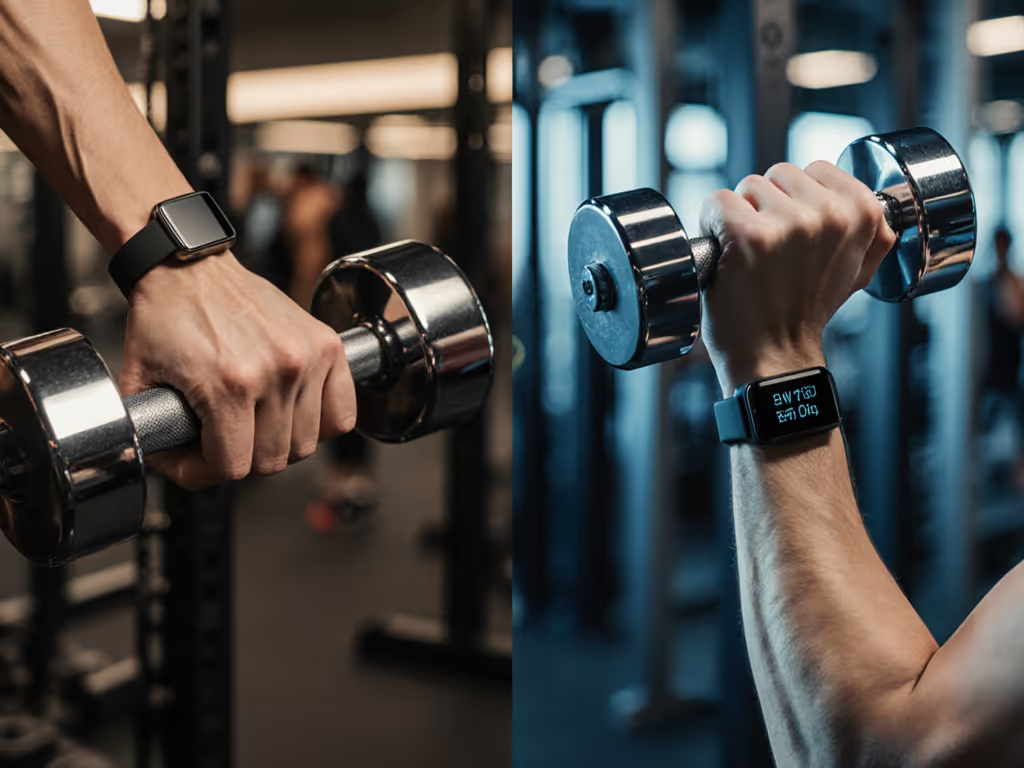
Let's cut through the marketing hype. If you're investing in ring fitness trackers or a diet workout tracker, you need to know what they actually measure, not what they promise. I've seen too many users abandon devices after realizing their rep counters are guessing, not measuring. And when you can't export your three years of gym data because a company changed its policy? That's not just inconvenient, it's costly. Total cost matters when your progress metrics vanish behind a paywall.
As someone who rebuilt my health metrics after losing two years of sleep data to a "free" app's policy change, I approach wearables with a ledger-first mindset. Today, we're dissecting gym performance tracking capabilities, specifically rep counting accuracy, muscle recovery metrics, and how much you'll really pay over time. Forget glossy features; let's examine what the data actually tells you.
Unlike wrist trackers, ring fitness trackers don't claim to count reps automatically. That's not a limitation, it's physics. Rings lack the positional awareness needed for weightlifting form analysis. Your finger moves differently than your wrist during curls, presses, or rows. When Oura or Circular add "activity detection," it's essentially estimating based on movement duration and intensity, not actual rep patterns.
Wrist-based trackers like the Garmin Forerunner 265 use multi-axis accelerometers and gyroscope sensors to detect motion patterns. Their algorithms compare movement speed, range, and repetition against known exercise libraries. This gives them an edge for rep counting accuracy, but only with certain movements. Chest presses? Solid. Bicep curls? Hit-or-miss. Complex lifts like cleans? Forget it. For a broader breakdown of when wrist, ring, or chest-strap form factors make sense by activity, see our form factor comparison.
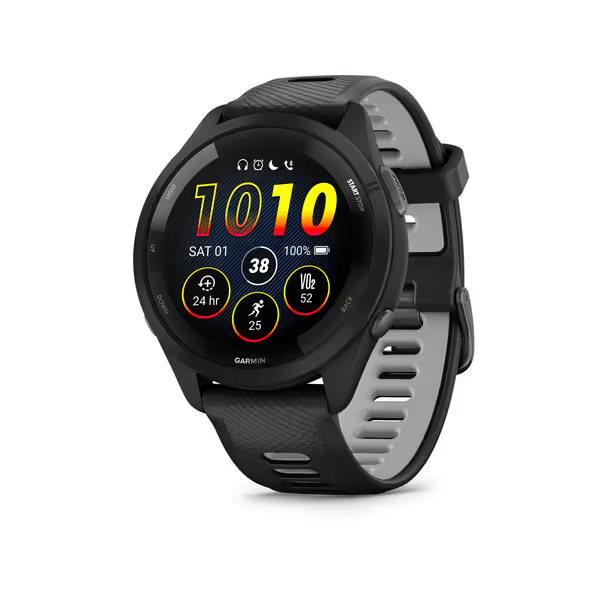
The reality check: no consumer wearable achieves 95%+ rep counting accuracy across all exercises. A study published in the Journal of Sports Science confirmed wrist trackers correctly identified 78-85% of reps for linear movements (like leg press), but dropped to 60-70% for rotational exercises (like seated rows). Rings? They're not even in this race, their sensor suite simply isn't designed for this workload.
Here's where rings fight back. For muscle recovery metrics, ring fitness trackers excel at continuous monitoring. The Oura Ring's proximity to arterial blood flow provides rock-solid resting heart rate and heart rate variability (HRV) readings, critical indicators of recovery status. Rings stay put during sleep, capturing uninterrupted data where wrist trackers might slip during toss-and-turn nights.
Wrist devices like the WHOOP Strap 4.0 offer similar recovery metrics but with trade-offs. For a head-to-head analysis of how WHOOP and Oura handle recovery and sleep in real training, read our WHOOP vs Oura comparison. Their optical sensors can lose contact during sleep if you're a restless sleeper, creating gaps in your HRV trendline. However, WHOOP's strength lies in correlating recovery data with workout strain, something rings can't match without workout-specific motion data.
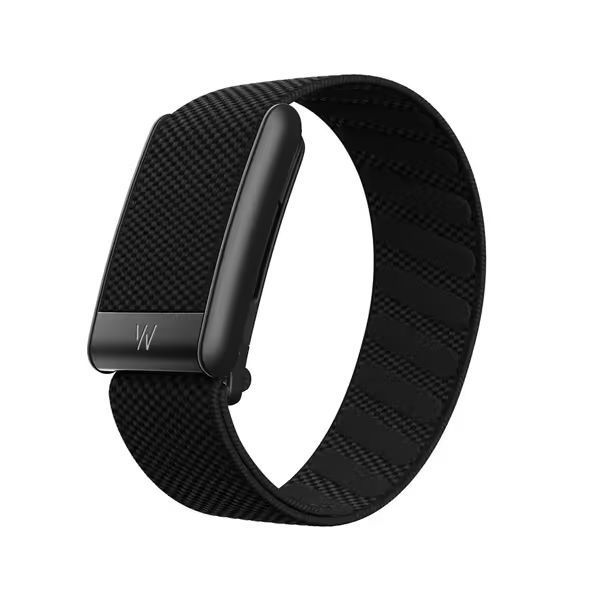
Ultimately, rings provide cleaner baseline recovery metrics, while wrist trackers better contextualize recovery against your actual gym performance. If your goal is optimizing gym performance tracking, you need both perspectives. A ring for nightly recovery baselines, paired with a wrist tracker for workout strain measurement, creates the complete picture.
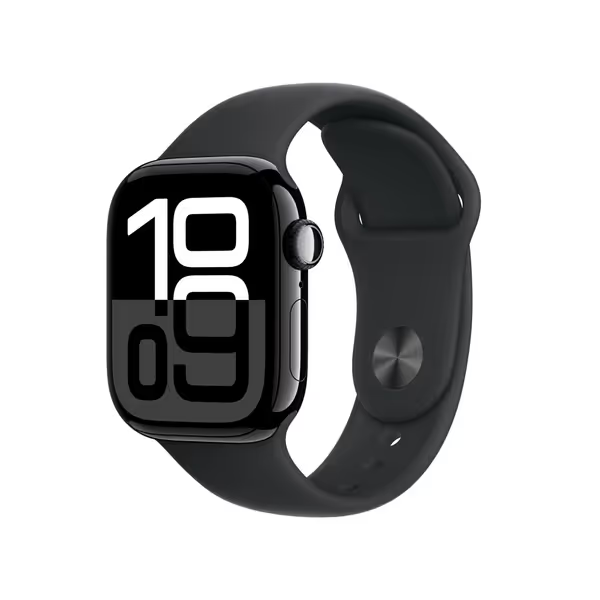
Let's be brutally honest: neither device type offers reliable weightlifting form analysis. Some apps claim "form coaching," but they're making educated guesses based on movement duration and speed, not actual biomechanics. Your Apple Watch Series 10 might detect you're doing something resembling bicep curls, but it can't tell if your elbows are flaring or your back is arching.
This isn't a limitation of current technology, it's physics. Proper form analysis requires 3D skeletal tracking, which consumer wearables lack. Even with dual-wrist setups (like wearing trackers on both arms), you're getting imprecise motion data, not joint angle measurements.
Here's what actually works: film yourself. No wearable replaces visual feedback. If your tracker's "rep counter" shows 12 reps but you know you only did 10, trust your body, not the algorithm.
This is where my ledger mindset kicks in. Let's compare five-year costs for serious users:
Ring Fitness Tracker Scenario (Oura Ring+)
Wrist Tracker Scenario (Garmin Forerunner 265)
The ring costs over twice as much long-term. Now consider data access: Oura locks detailed analytics behind its subscription. Garmin provides basic metrics forever. If you cancel your ring subscription, you become a diet workout tracker with limited functionality, just step counts and sleep duration.
Total cost matters when your device turns into a paperweight after year three because you won't pay $72/year for rep history you can't export. To see how subscription paywalls differ across brands and the real long-term costs, check our fitness tracker subscription breakdown.
When comparing rep counting accuracy, wrist trackers win for most weightroom activities, but with major caveats:
Rings technically "track" weightlifting only through heart rate spikes and movement duration, meaning they'll flag "activity" but won't distinguish between 5 reps of deadlifts and 5 minutes of stretching. For serious lifters, this isn't gym performance tracking, it's activity logging.
The hard truth: optical sensors struggle during strength training because muscle contraction temporarily restricts blood flow, disrupting heart rate monitoring. We explain why finger-based PPG can beat wrist sensors at rest, but not under load, in our heart rate accuracy deep dive. Your Apple Watch might show 150 BPM during sets, then plummet during rest, creating noisy recovery data that inflates perceived exertion.
Here's your exit-plan checklist before buying:
For pure gym performance tracking, wrist trackers deliver better rep counting accuracy and workout-specific metrics. But if you prioritize recovery baselines and need something unobtrusive for 24/7 wear, ring fitness trackers shine, provided you accept their workout tracking limitations.
Let's make this practical:
Choose a wrist tracker if: You want reliable rep counting for machines, need strength training metrics, value long-term data ownership, and prioritize workout-specific analytics. The Garmin Forerunner 265 offers the best balance of accuracy, repairability, and no mandatory subscription.
Choose a ring fitness tracker if: Your focus is recovery baselines, you hate wrist bulk, and you'll supplement gym tracking with manual logging. Just be prepared to pay subscription fees for meaningful data access.
Consider both if: You're serious about strength training. Use a ring for nightly recovery metrics and a wrist tracker just during workouts. This gives you clean HRV baselines plus actual workout analytics.
Own your data, or someone else owns your decisions. When your two years of gym progress hinges on a company's subscription model, you're not buying a tracker, you're renting access to your own body. True value isn't in the shiny specs sheet, but in what you can actually do with your data years later. Total cost matters, but data ownership matters more.