
Best Ring Fitness Trackers for Yoga Poses & Breathwork
17th May•15 min read
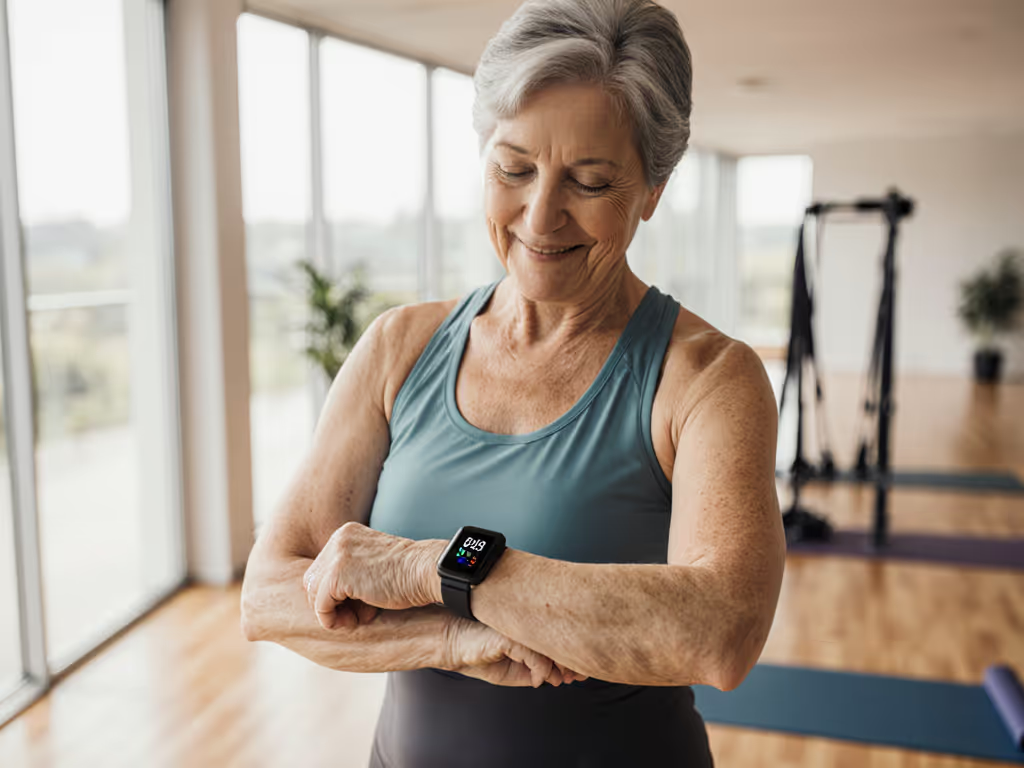
Finding the right fitness tracker for women over 50 means rethinking what "fitness" actually measures at this stage of life. The conversation shifts from daily step counts to something more nuanced: monitoring bone density during menopause, detecting falls before they happen, tracking recovery patterns that change with hormones, and managing the cost-benefit of technology without overpaying for features you'll never use. Right-size your tech - and it becomes an ally, not another source of decision fatigue.
The stakes of health data change after 50. For women navigating menopause and beyond, accelerated bone loss is a real concern, not a hypothetical. Studies confirm that bone density monitoring becomes particularly valuable during and after the menopausal transition, when estrogen decline directly impacts skeletal health[1]. Falls also pose a higher injury risk, and daily movement patterns - sleep disruption, activity consistency - affect both bone strength and recovery.
Yet most mainstream fitness trackers were designed around younger bodies and different priorities. A standard smartwatch optimized for weekend athletes doesn't ask the questions a woman managing joint stiffness, medication timing, or unpredictable hot flashes needs answered. This gap creates a choice: rely on generic metrics or invest in trackers specifically tuned to your physiology and life stage.
The decision also hinges on something rarely discussed in reviews: switching costs. If your current ecosystem doesn't export data, locks you into a subscription tier, or requires a complete rebuy when you need better features, you're not just buying a device - you're paying a hidden tax on change. Switching costs matter as much as features on paper. If you're comparing ongoing fees, our fitness tracker subscription guide breaks down total cost over time.
Traditional bone density monitoring happens via DEXA scan - a clinic visit that takes roughly 6 minutes and delivers medical-grade diagnostic data[3]. Wearables can't replace that, but they can bridge the gap. Specialized bone health monitors use ultrasound technology to measure bone mineral density (BMD) and provide continuous feedback on bone strength and quality[1]. While less precise than DEXA, home-based tracking lets you monitor trends between clinical scans and tie improvements directly to exercise and dietary changes.
Smart scales now offer a practical middle ground. Devices in the $300-500 range measure bone mass alongside body composition using low-level electrical signals that pass through the body[5]. Unlike smartwatches that estimate from wrist-based data, these scales give you segmental bone health broken down by region - spine, hips, limbs - exactly where fracture risk matters most for women[2].
Osteoporosis doesn't kill; fractures do. Wearables equipped with fall detection sensors alert emergency contacts instantly[1]. Compare how leading devices' emergency features perform in real-world tests. Smart insoles and specialized footwear track gait and balance, identifying walking pattern shifts before they cause a stumble - a prevention layer that generic activity trackers miss entirely[1].
Temperature sensors in advanced trackers can log skin temperature fluctuations associated with hot flashes. For a deeper dive into menopause biometrics, see how HRV, temperature, and sleep patterns map to symptom changes. Heart rate variability (HRV) and sleep staging reveal how menopause disrupts recovery. The most useful trackers allow you to journal behaviors - medication timing, dietary triggers, stress - and then correlate them with biometric changes, turning raw data into actionable patterns[5].
Smart reminders are underrated. A medication reminder feature - some trackers and companion apps include this - can nudge you at the same time daily to take osteoporosis medication or supplements. It sounds simple, but adherence is one of the largest factors determining whether bone loss reversal actually works.
Best for: Women who want one device for sleep, daily activity, and basic heart health.
What they measure: Steps, stairs, active minutes, sleep stages, heart rate, heart rate variability, and sometimes blood-oxygen saturation[4]. Most now include fall detection and can detect irregular rhythms.
Reality check: Optical heart rate sensors are less accurate on darker skin tones and during high-intensity or strength intervals[3]. GPS can drift in dense urban areas. Sleep stage classification - light, deep, REM - uses algorithms trained on younger populations, so readings may feel off during perimenopause or on night-shift schedules. Most offer bone mass estimates, but these are approximations, not direct measurement.
Price-to-performance: Entry models start around $200-300; premium versions push $400+. Many require subscription ($120-300 annually) to unlock advanced insights like training load, recovery scores, or detailed health analytics. If you primarily care about daily activity and fall detection, the subscription layer feels unnecessary; if you're optimizing training readiness around hormonal cycles, it becomes relevant.
Switching costs: Data export is uneven. Some integrate seamlessly with Apple Health or Google Fit; others create data silos. Battery life typically maxes out at 2 weeks, so charging is part of the weekly routine.
Best for: Women with diagnosed osteopenia or osteoporosis who want clinical-grade bone monitoring at home.
What they measure: BMD via ultrasound, and in some cases, directly target the spine and hip - the fracture-risk hot zones[1]. Osteoboost, the first FDA-cleared wearable for bone loss, applies targeted vibration to the spine and hips for 30 minutes daily, helping reduce bone loss and build strength. It's backed by clinical trials and NASA research on bone preservation[6].
Reality check: These devices excel at what they're designed for - bone - but may not track sleep, stress, or daily activity comprehensively. They're specialist tools, not all-in-one platforms.
Price-to-performance: Specialized monitors range from $300-800. Osteoboost is an active intervention, not just measurement, so the value proposition is different. You're paying for a therapeutic device, which may be eligible for insurance or FSA/HSA reimbursement depending on diagnosis and plan.
Switching costs: Lower lock-in because these devices live outside the broader smartwatch ecosystem. You can use Osteoboost or a bone monitor alongside a smartwatch without duplication.
Best for: Women who want comprehensive body composition (bone, muscle, fat, water) without wearing something 24/7.
What they measure: Weight, BMI, body fat percentage, muscle mass, bone mass, body water, metabolic rate, visceral fat, and - on advanced models - segmental analysis (arms, legs, trunk)[2]. Top models support multiple user profiles and athletic or pregnancy modes, adapting to life stage.
Reality check: Accuracy depends on hydration, time of day, and standing position consistency. Unlike DEXA's precision, bioelectrical impedance is an estimate - but a useful one if you measure the same way every time. The real power is longitudinal tracking: watching bone mass trend over weeks and months, and correlating it with exercise and supplement regimens[8].
Price-to-performance: $150-400 for models that measure bone. Mid-range Withings or Garmin scales ($200-250) capture bone mass alongside other metrics; premium models offer app integrations and recovery insights. No subscription required; you own the data.
Switching costs: Minimal. Scales export to Apple Health, Google Fit, and major fitness apps. If you switch devices later, your historical data comes with you.
If a tracker won't stay on your wrist comfortably for 24 hours - because the band chafes, the case is too bulky, or the materials irritate your skin - it will sit in a drawer. If you have sensitivities, our guide to fitness trackers for sensitive skin covers hypoallergenic materials and wear tips. Women over 50 often have skin sensitivities, smaller wrist sizes, or simply prefer lighter devices. Verify band sizing, try silicone-free options if you're sensitive, and check battery life (longer life means fewer charge disruptions to your daily rhythm).
Generic activity estimates fail women. Estrogen changes bone metabolism, alters calorie expenditure, affects sleep architecture, and shifts recovery needs. Seek trackers that:
Add up: device cost, annual subscription, app premium tiers, strap replacements, and battery life. A $200 tracker with a $10/month subscription ($120 annually) and 7-day battery life (charging weekly, strap wear) totals $320+ yearly. A $400 smart scale with no subscription, 3-month battery, and a $30 strap every 2 years costs less in year two onward. Plain-speak budgeting matters - calculate the 3-year cost, not just the sticker price.
Can you export your bone density trends, sleep data, and activity history if you switch devices? Do you have granular privacy controls? Is your location data shared by default? These sound like edge cases until you've invested a year of data in a closed ecosystem and want out. Choose trackers that integrate with Apple Health, Google Fit, or open standards.
Scenario 1: Diagnosed Osteoporosis, Wants Specialist Monitoring
Start with a bone health monitor (e.g., Osentia or similar ultrasound-based device) or Osteoboost for therapeutic intervention. Pair with a smart scale for monthly body composition trends. Skip the smartwatch subscription unless you're training seriously. Cost year one: ~$500-700. Cost year two: ~$50 (scale replacement strap). Exit path: Both devices export or require no cloud lock-in; switch or supplement with any smartwatch without re-buying scales.
Scenario 2: Perimenopause, Managing Symptoms and Activity
A smartwatch with strong sleep tracking, HRV monitoring, and menopause-aware apps (e.g., with cycle and symptom logging) works best. Look for 2+ week battery life, skin-safe silicone, and export to Apple Health. Add a smart scale quarterly for bone check-ins without daily wear friction. Cost year one: ~$300 (watch + scale). Cost year two: ~$120 (watch subscription or optional premium features). Exit path: If you switch watches, your scale and health app data port easily.
Scenario 3: General Health, Budget-Conscious, Low Device Fatigue
Invest in one quality smart scale ($200-300) that measures bone mass and connects to your phone's native health app. Measure monthly or quarterly instead of daily. Skip the smartwatch unless you specifically want sleep coaching or fall detection. Cost year one: ~$250. Cost year two: ~$30 (optional). Exit path: Maximum flexibility; scale works with any health platform.
You don't need to upgrade if:
You should consider switching if:
When you do switch, plan your exit: export data 2-3 weeks before the transition, verify the new device can receive your historical data, and stagger the upgrade to avoid a week without tracking continuity (if that matters to you).
Women over 50 deserve technology that respects their time, budget, and body. Right-size your tech by mapping your actual health priorities - bone density, fall risk, menopause symptom patterns - rather than adopting whatever features a generic smartwatch offers. Research the specific devices mentioned here (bone monitors, Osteoboost, mid-range smart scales) by reading user reviews that focus on comfort, accuracy for your body type, and long-term cost. Test the companion app with a free trial or demo before committing. And remember: a tracker that sits unused is worth nothing. Choose for comfort and clarity first; features second. Your future self - and your bones - will thank you for the thoughtful choice.