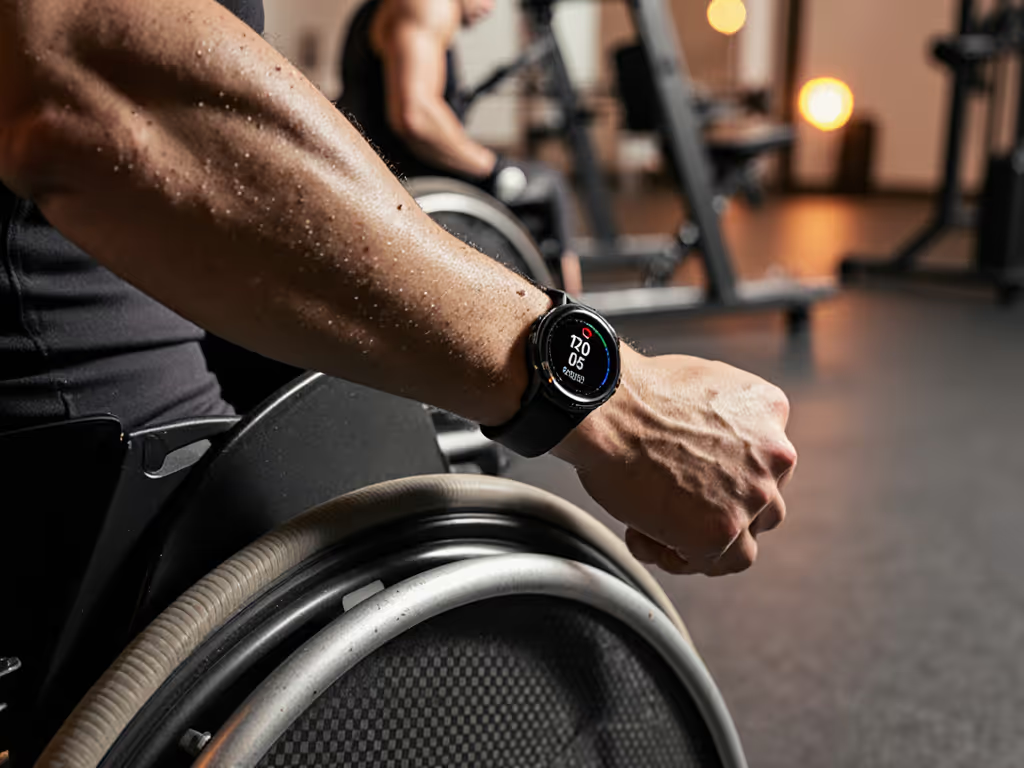
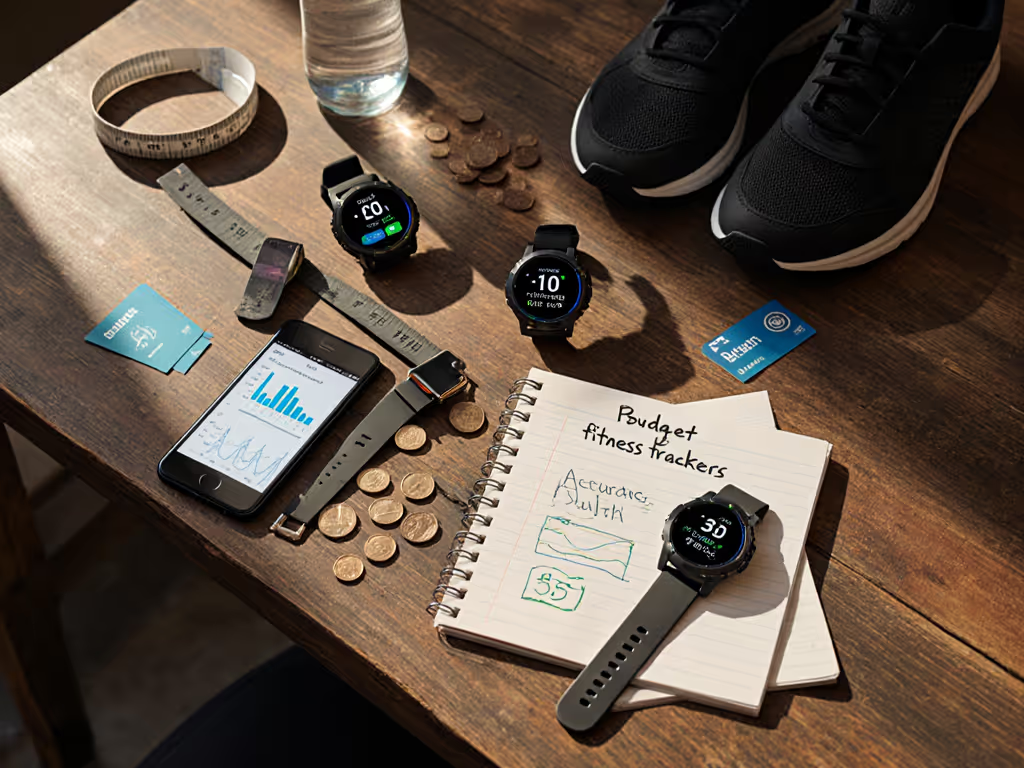
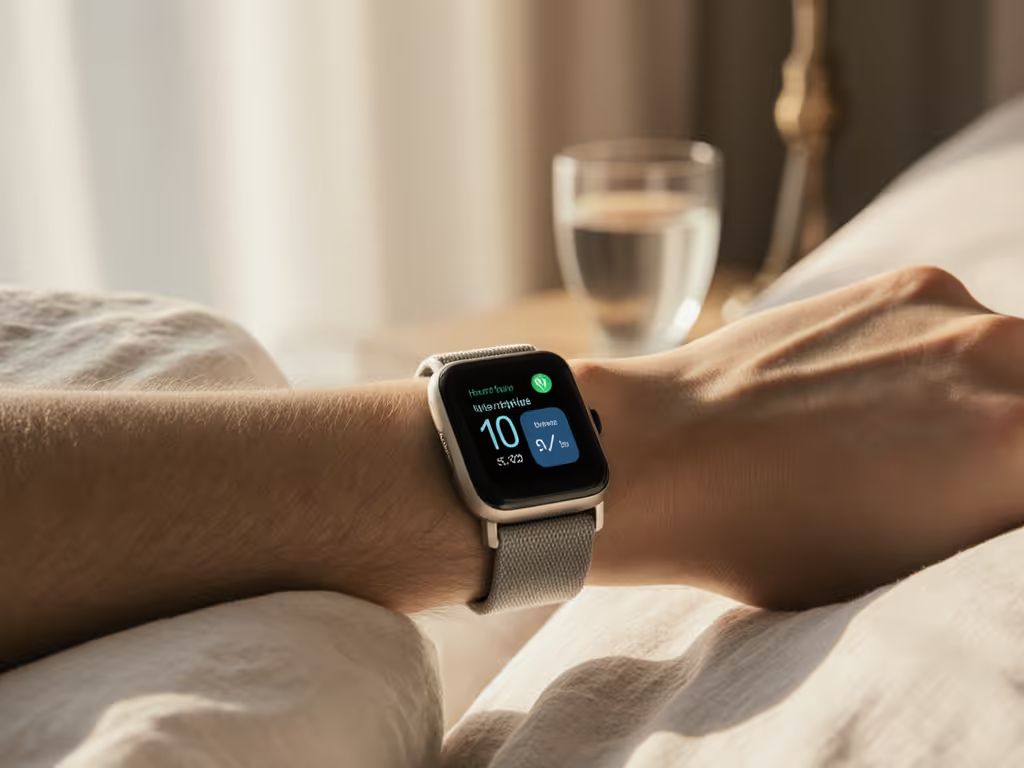
For wheelchair users seeking reliable fitness tracking, accuracy isn't a luxury (it's non-negotiable). Recent studies reveal significant disparities in how mainstream wearables measure energy expenditure (EE) and heart rate (HR) during wheelchair propulsion, with error rates reaching 73.9% for EE on some devices [1]. This FAQ deep dive examines the real-world performance of leading wearables, identifies accessibility barriers, and highlights solutions that prioritize inclusive fitness technology.
How Accurate Are Consumer Wearables for Wheelchair Metrics?
Energy Expenditure Measurement
Apple Watch Series 4: Underestimates EE by 27.4% MAPE (wheelchair users) and 32.1% (non-disabled) [1].
Fitbit Versa: Overestimates EE by 73.9% MAPE (wheelchair users) and 44.7% (non-disabled) [1].
Both devices show worsening accuracy at higher intensities, highlighting fundamental algorithmic limitations with upper body activity.
Heart Rate Tracking
Device
Wheelchair Users (MAPE)
Non-Disabled (MAPE)
Apple Watch
8.5%
8.1%
Fitbit
17.4%
14.3%
Both systems consistently underestimate HR, with Fitbit's accuracy classified as "poor-moderate" across inclines and speeds [1]. For a deeper dive into how optical sensors measure heart rate and common sources of error, see our HR sensor accuracy explainer.
Push Counting Accuracy
Apple Watch Series 4: Achieves 9.20% MAPE for push counts when calibrated (a significant improvement over Series 1 at 20.62%) [2].
Fitbit Flex: Records 148.4% MAPE error due to interpreting arm movements as steps [3], demonstrating poor adaptive training metrics. Learn how step counters are validated and where they commonly fail in our step counting accuracy tests.
Which Features Truly Enhance Accessibility?
Wheelchair-Specific Modes
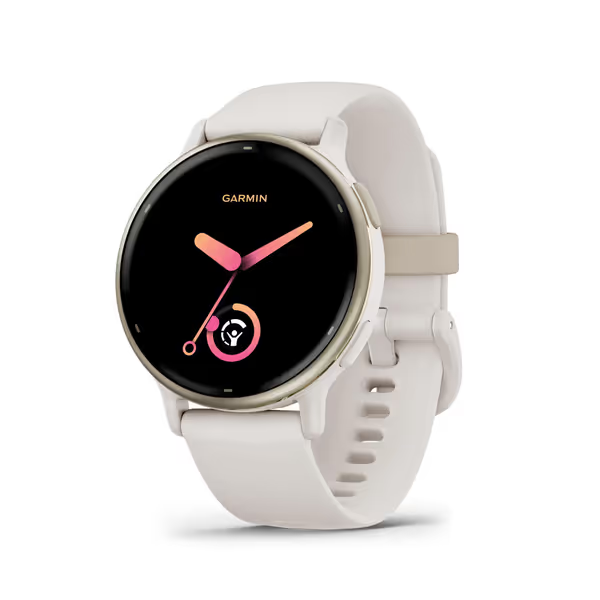
Devices like the Garmin vívoactive 5 (
Garmin vívoactive 5
Personalized health tracking and coaching for diverse activity and body needs.
Inclusive tracking: Wheelchair mode, nap detection, diverse sports apps.
Personalized insights: Sleep coaching, Body Battery, recovery time.
AMOLED display & phone-free music for enhanced experience.
Cons
Connectivity can be unreliable for some users.
"Data presented is intended to be a close estimation" disclaimer.
Customers find the Garmin Vívoactive 5 to be a fantastic fitness watch with good battery life and easy-to-use interface. The watch tracks all activities, including steps and sleep, with accurate sleep monitoring, and customers appreciate its numerous features, including golf yardages. The functionality and connectivity receive mixed reviews - while some say it works great for workouts, others find it unreliable, and while it pairs well with iPhones, some report Bluetooth connectivity issues.
Customers find the Garmin Vívoactive 5 to be a fantastic fitness watch with good battery life and easy-to-use interface. The watch tracks all activities, including steps and sleep, with accurate sleep monitoring, and customers appreciate its numerous features, including golf yardages. The functionality and connectivity receive mixed reviews - while some say it works great for workouts, others find it unreliable, and while it pairs well with iPhones, some report Bluetooth connectivity issues.
Provide challenges tailored to wheelchair users [2]
This represents a shift toward genuine disability-friendly wearable features, though real-world validation remains essential.
Sensor Placement Alternatives
Chest straps (e.g., Polar H10) maintain <5% HR error in diverse conditions [1][5], avoiding wrist-sensor limitations.
Bicep optical sensors show promise for consistent readings during propulsion [5].
How Can Users Verify Real-World Accuracy?
Validation Protocols
Independent testing should include:
Mixed skin tones and wrist sizes
Variable temperatures (e.g., from 15°C to 35°C)
Movement types: sustained pushes vs. intermittent propulsion
Incline variations (0.5% to 5% grades) [1][5]
Without these replicable steps, lab-optimized metrics often fail in daily use. If you use multiple devices, consolidate your data into a unified fitness dashboard to compare readings side by side. As one researcher noted after observing sensor drift during winter runs: "Mixed protocols or it isn't valid." [Author anecdote]
What Are the Most Viable Options Today?
Top Tier: Apple Watch + Garmin
Apple Watch Series 4+: Leads in HR accuracy (8.5% MAPE) and push counting (9.2% MAPE) [1][2].
Garmin vívoactive 5: Offers dedicated wheelchair mode and 11-day battery. If long gaps between charges are a priority, see our trackers that last weeks roundup.
Mid Tier: Research-Backed Alternatives
Chest straps (e.g., Polar H10) for clinical-grade HR accuracy during intense sessions
Bicep-mounted sensors reduce motion artifacts during propulsion [5]
Avoid: Step-Centric Trackers
Devices like Fitbit Flex miscount arm movements as steps (148% error) [2], providing misleading adaptive training metrics.
Practical Tips for Improved Tracking
Calibrate religiously: Apple Watch push counts drop from 22.8% to 13.9% MAPE post-calibration [2].
Position matters: Optical sensors on biceps show less drift than wrists during propulsion [5].
Cross-validate: Spot-check HR with finger sensors during varied activities.
Update firmware: Newer Apple Watch generations show 53% lower error than predecessors [2].
"Show me the error bars, then we can talk features." (Researcher maxim for inclusive fitness technology)
The Path Forward
The gap between lab promises and real-world performance remains significant. While Apple Watch currently leads in wheelchair fitness tracking accuracy, Garmin's specialized modes show manufacturers are recognizing this user segment. True progress requires:
Transparent error margins for wheelchair modes
Validation across diverse body types and environments
Rejection of "one-size-fits-all" step and calorie algorithms
Confidence, not certainty should guide adoption (until independent tests confirm real-world accuracy across the spectrum of mobility).