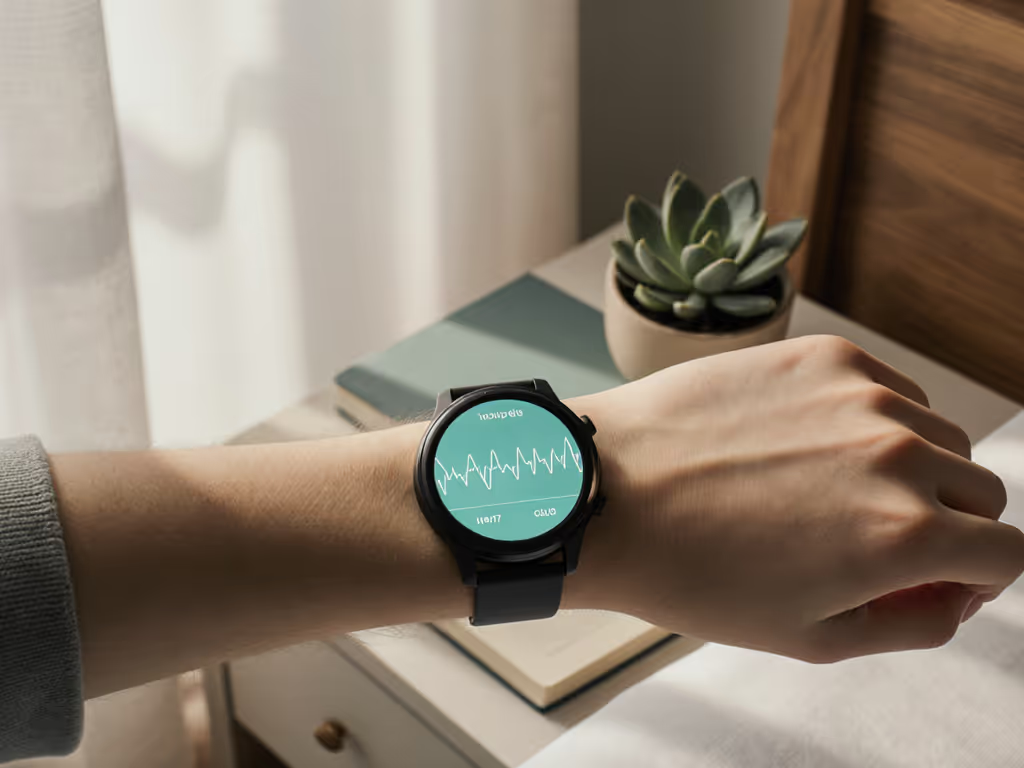
Fitness Trackers for Mental Health: Track Mood Patterns
10th May•9 min read
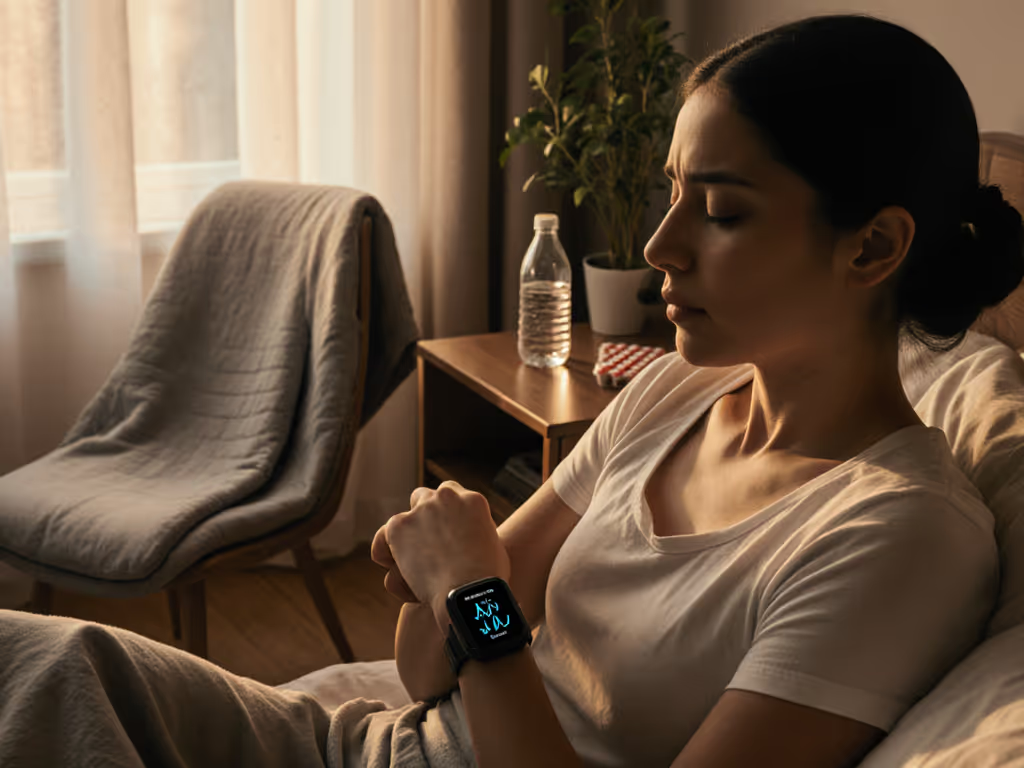
Fitness trackers for chronic pain can transform how you manage energy and plan safe activity, but only if you set them up to support your rhythm, not shame it. Pain flare monitoring with wearables works best when you know which metrics matter for your condition, what settings to dial down or mute, and how to read your data without judgment.
This guide walks you through building a low-stress routine with a tracker that bends to your life instead of adding pressure to it.
People living with chronic pain face a real paradox: moving too little worsens stiffness and mood, but moving too much can trigger a flare that costs days or weeks of recovery. You're managing on a knife's edge, and your own sense of effort isn't always reliable after a flare or on a bad sleep night.
Wearables shift that guessing game into data. Real-time metrics like heart rate variability, resting heart rate, and respiratory rate can act as biometric pain indicators, early warning signs that your nervous system is ramping up inflammation or that recovery is lagging. A tracker's wearable data for pain management also lets you spot patterns: Which types of activity trigger flares? How many steps feel safe on days after poor sleep? Does your heart rate stay elevated for hours after activity, signaling overexertion?
The catch: default settings on most trackers are built for fitness optimization, not pacing. They reward intensity, streak achievement, and high step counts. For chronic pain, those features become noise or, worse, sources of frustration. You don't need another voice telling you to "close your rings" or compete with friends. You need a tool that whispers What does today's capacity look like?
Small, repeatable wins beat flashy charts and streaks.
No tracker is useful if it irritates your skin, slips during the day, or feels too bulky for sleep. Before worrying about sensor accuracy or app features, audit the physical fit.
Prioritize:
If a tracker doesn't feel right on day three, it won't feel right on day 300. Make it doable daily by starting with the device itself. If skin irritation is a concern, see our fitness trackers for sensitive skin guide for materials and wear tips.
Most trackers arrive with badges, achievements, reminders to stand up, and daily step targets pre-enabled. Turn them all off, or dial them down to a single, gentle notification (one that supports your routine without scolding). For help tailoring alerts and screens to your pacing needs, use our goal-specific customization guide.
In the app, disable or mute:
Reconfigure goals to reflect chronic pain reality:
Instead of a fixed daily step count, set a rolling weekly average or a range (e.g., "good days, 6,000-8,000 steps; flare days, 2,000-3,000; most days, 4,000-5,000"). This acknowledges that chronic pain is variable, not lazy. On flare days, 2,000 steps is a victory, not a failure.
Use a single, calm notification (perhaps a soft vibration at wind-down time) to prompt you to review your metrics, not to scold you for missing targets. The message should shift from You haven't done enough to Here's what your body is telling you.
Inflammation tracking and pain flare monitoring rely on a different set of metrics than a runner's training dashboard.
Prioritize these signals:
Hide or ignore: calories burned, active minutes, training load scores, and VO2 Max. These metrics drive intensity chasing, which is the enemy of chronic pain management.
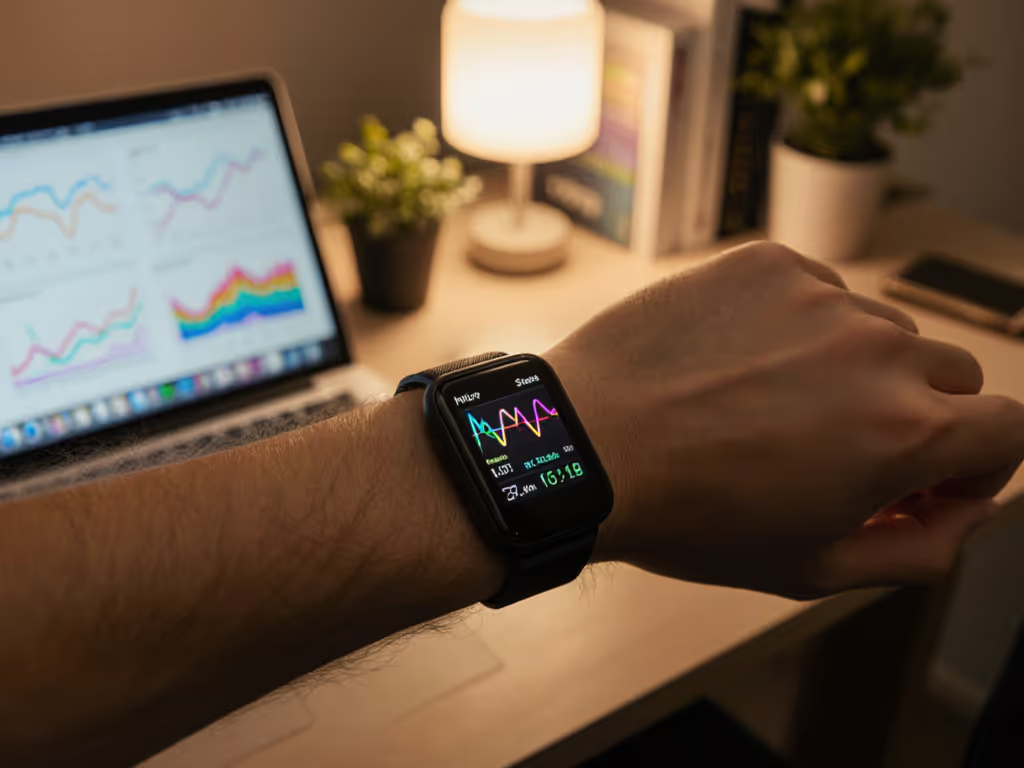
Don't live in the app daily. Instead, schedule a 5-minute review once a week (say, Sunday evening or Monday morning) to spot trends without obsessing. To make this routine stick, follow our fitness tracker habit-building guide.
Your weekly check-in:
Keep this log in a simple notes app or spreadsheet. Over time, you'll build a personal pain flare monitoring system that predicts your cycles.
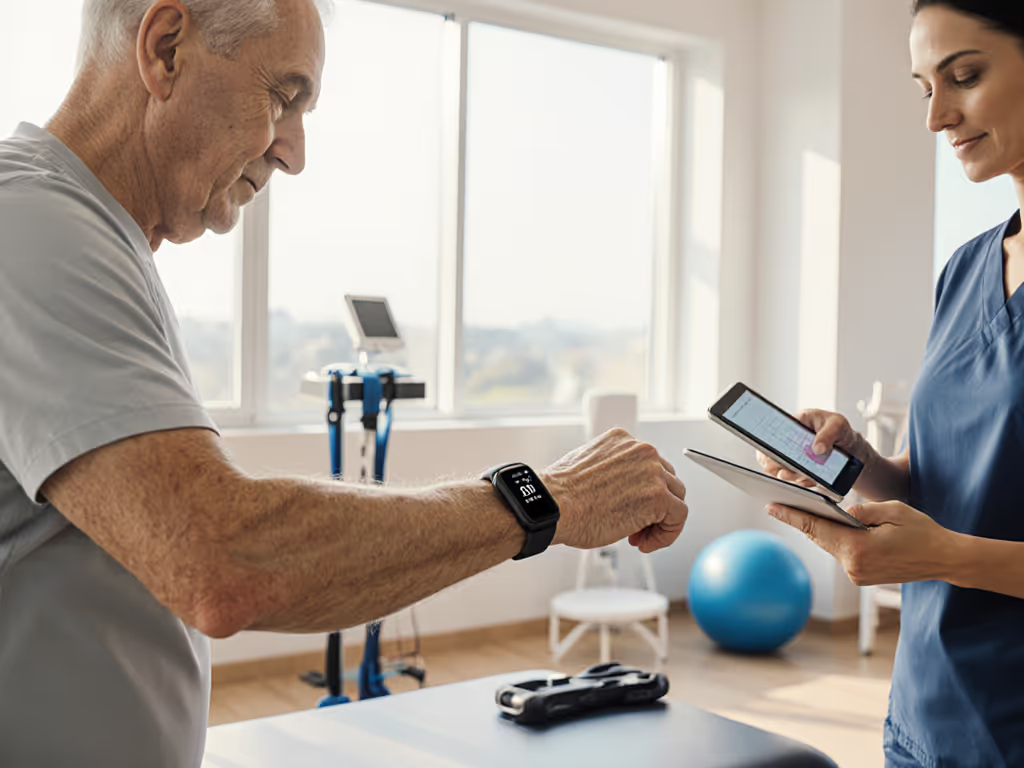
Many trackers now export data or integrate with health platforms. Here’s how to build a unified dashboard so your care team sees a single, coherent view. If you see a rheumatologist, physical therapist, or pain specialist, ask whether they can review your HRV and activity patterns.
Bring a 2-3 week snapshot showing:
This wearable data for pain management becomes evidence in conversations with your care team and can help adjust activity prescriptions, medication timing, or pacing strategies. It also reminds clinicians that you're tracking yourself carefully and deserve personalized guidance.
Your tracker is a mirror, not a judge. If it's triggering shame, anxiety, or perfectionism (whether through notifications, arbitrary scores, or step counts that don't match your capacity) reconfigure or mute it. Consistency beats intensity when the device fits your life, and your life includes pain, variable energy, and the right to rest.
Start with one week of gentle pacing and data collection. Notice your patterns. Adjust. Repeat. Over time, you'll build a vocabulary with your body and a routine that feels supportive, not punishing.
Your next step: If you own a tracker, spend 20 minutes tonight disabling badge notifications and resetting goals to a weekly rolling average or a range. If you don't yet own one, prioritize comfort and sleep-friendliness over feature lists. Then, plan your first check-in for next week.
Your tracker works best when it bends to you, not the other way around.