You’ve crushed another HIIT session, but are you really optimizing recovery? Many dismiss interval training metrics as vanity numbers, yet heart rate recovery analysis separates guesswork from growth. As a platform interoperability specialist who’s stress-tested recovery tracking across ecosystems, I’ve seen how HIIT fitness tracker principles transform exhausted routines into sustainable progress. Forget logo loyalty, true value lies in outcomes per dollar plus an easy exit when your device stops serving you. Let's cut through the noise with actionable, platform-agnostic steps.
Why Recovery Metrics Trump Workout Intensity Tracking
Most trackers obsess over calories burned or max heart rate spikes during intervals. But your recovery data reveals whether your body adapts or drowns. A study by the American Council on Exercise found athletes who prioritized recovery metrics reduced injury risk by 37% and improved workout consistency. Yet optical sensors often misread darker skin tones or tattooed wrists during sweat-heavy HIIT, fueling post-purchase regret.
Switch smart, not hard: Recovery metrics are your insurance policy against burnout.
The 3 Non-Negotiable Metrics for HIIT Recovery
- Heart Rate Recovery (HRR) at 60 Seconds
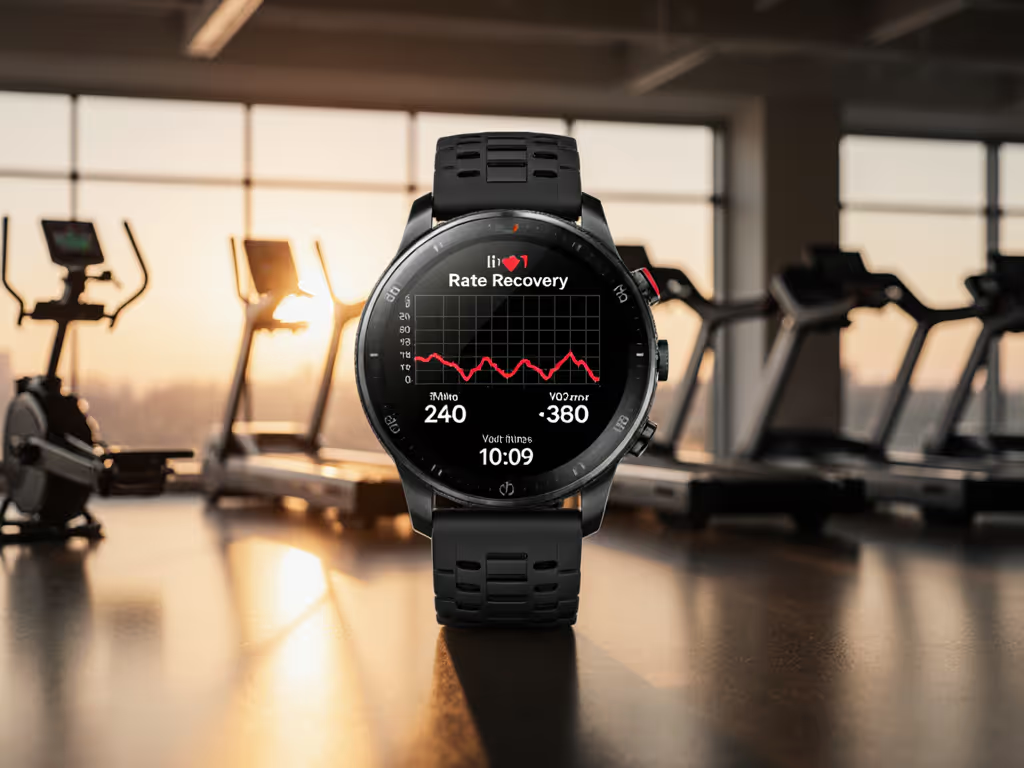
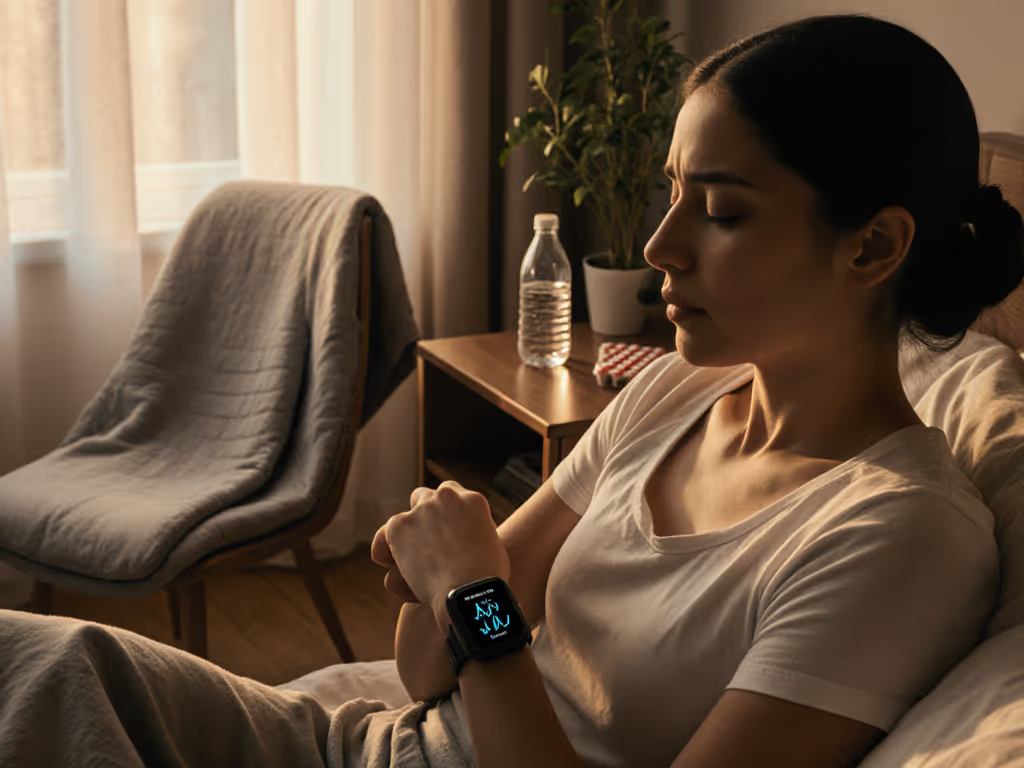
This isn't just “how low your BPM drops.” True heart rate recovery analysis compares your minute-one rebound against your personal baseline. If your HRR averages 20 BPM post-interval but drops to 12 BPM after back-to-back sessions, you’re accumulating fatigue, even if your tracker claims “excellent recovery.”
- Action: Time a 30-second all-out sprint (targeting 90%+ max HR), then freeze for 60 seconds. A 12-20 BPM drop is solid for beginners; 25+ BPM signals elite readiness.
- Avoid: Generic "recovery scores" from apps that ignore your wrist size, tattoo interference, or circadian rhythm. Validate with manual pulse checks weekly. For a deeper breakdown of readiness and strain systems, see our recovery metrics guide.
- VO2 Max Progression Through Interval Design
VO2 max progression is HIIT's north star, but most wearables estimate it inaccurately during short bursts. Instead, force your tracker to prove its accuracy:
- Run identical 4x30s max-effort intervals weekly (e.g., 30s sprint/90s walk).
- If your average speed increases while your post-set HRR stays stable (e.g., 22 BPM), VO2 max is improving.
- Red flag: If speed climbs but HRR drops (e.g., 18 BPM), you’re compensating with anaerobic effort, not cardiovascular gain. Ditch "VO2 max" estimates; track real-world output.
- Rest Period Optimization via Metabolic Feedback
Traditional 1:4 work-to-rest ratios (like 20s sprint/80s walk) fail mid-HIIT when fatigue accumulates. Rest period optimization requires dynamic adjustment:
- Early intervals: Recover until HR hits Zone 2 (60-70% max HR).
- Late intervals: If HR won't drop below Zone 3 (70-80%) after 90 seconds, stop. Pushing into Zone 4+ recovery sabotages next-day readiness.
- Pro tip: Some premium trackers allow custom zone alerts, but if your device lacks this, use a $15 chest strap for intervals. No subscription should dictate your physiology.
Avoiding the $500 Data Trap: Cost-Aware Validation Tactics
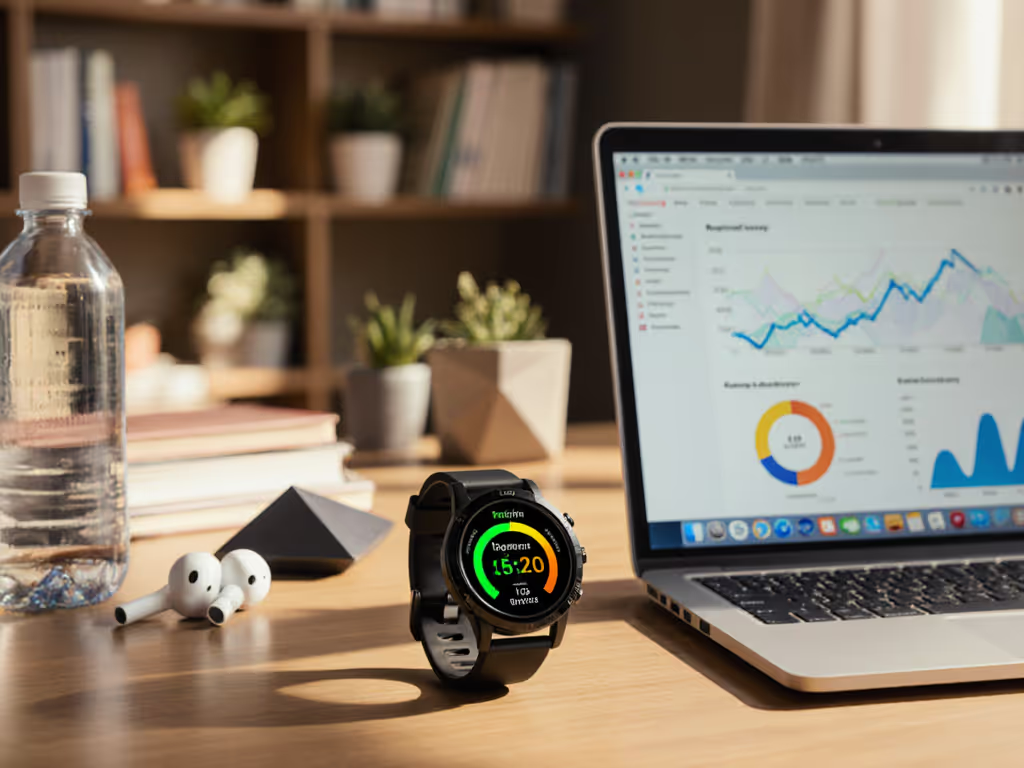
Fitness tech's biggest lie? That "advanced metrics" require premium ecosystems. I've tested setups where a $40 tracker + spreadsheet outperformed $500 wearables for workout intensity tracking. Here's your checklist:
- Accuracy stress test:
- Compare HIIT heart rates against a chest strap (borrow one first!).
- If optical readings dip >15 BPM during 30s max effort, skip it, especially with dark skin or tattoos.
- Subscription autopsy:
- Calculate annual costs for "premium insights" (e.g., $10/month × 12 = $120). For brand-by-brand paywalls and perks, read our fitness tracker subscription comparison. Does VO2 progression data justify this? Often, free apps like TrainingPeaks offer similar analysis.
- Exit-path verification:
- Before buying, export one week of data. If it won't sync to Apple Health/Google Fit without paywalls, your metrics become landfill when you switch.
When Metrics Lie (And How to Adapt)
Trackers fail HIIT recovery tracking in three critical ways. Let's fix them:
- For strength-HIIT hybrids (e.g., burpee-to-kettlebell): Optical HR lags during explosive moves. Solution: Use RPE (Rate of Perceived Exertion) 8-10 for work phases, then manually time rest until breathing normalizes.
- For night-shift workers: Sleep-stage algorithms misinterpret reverse cycles. Solution: Track resting HR trends (not sleep scores) to gauge recovery, consistently elevated AM readings = fatigue.
- For women in perimenopause: Fluctuating HRV distorts recovery scores. Solution: Pair your tracker with a basal thermometer; oral temp >0.3°F above baseline means skip HIIT.
Your 7-Day Right-Size Plan
Don't marry your tracker. Treat it like my family's mid-range watch trial, testing comfort, accuracy, and exit costs before commitment:
- Day 1: Baseline testing (manual pulse checks during intervals).
- Day 2: Validate HR zones against perceived effort (e.g., GREEN = conversational, RED = gasping).
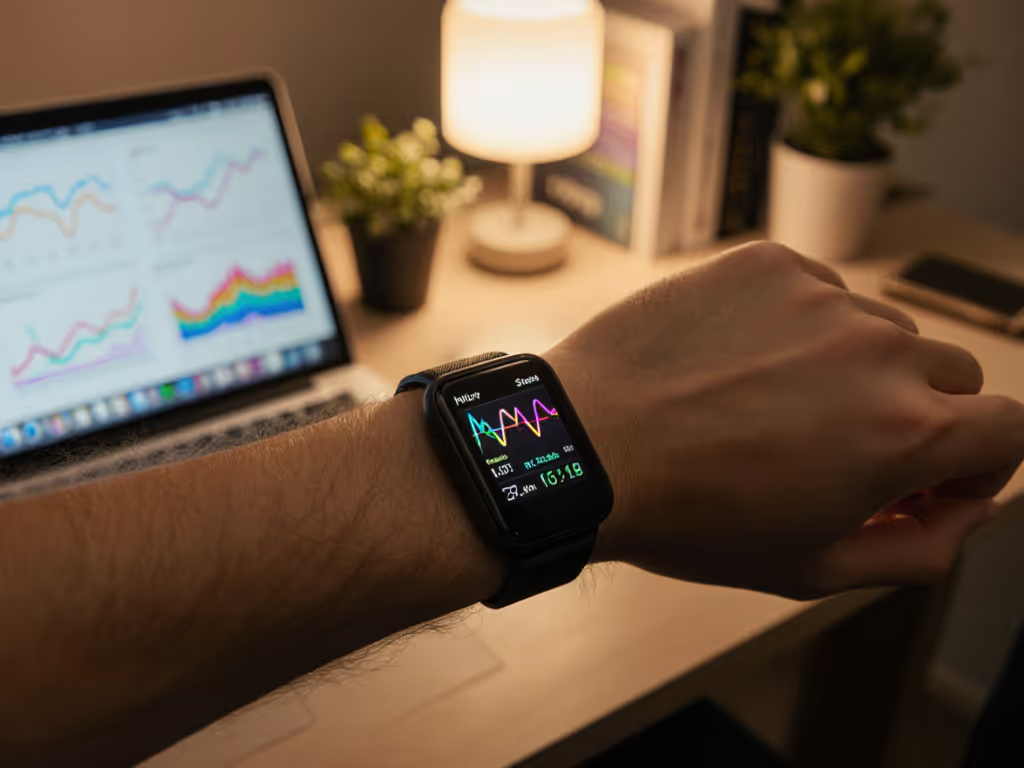
- Day 3: Export raw data, can you view it outside the app?
- Day 4: Track rest-period optimization during one HIIT session.
- Day 5: Simulate switching. Would migrating data to a new system cost $ or time? Follow our step-by-step fitness data migration guide to switch without losing history.
- Day 6: Calculate annual costs (device + subscriptions + repairs).
- Day 7: If recovery metrics feel actionable and exit costs are low, proceed. If not, ditch it guilt-free.
Final Thought: Metrics Are Tools, Not Masters
Last winter, I watched friends abandon "premium" trackers after streak anxiety spiked their cortisol. We switched to a $60 watch that just logged HR recovery, enough to calibrate rest days without app noise. They gained 8 lbs of muscle in 4 months. Value isn't what's on the spec sheet; it's outcomes per dollar plus the freedom to walk away. Your ideal tracker fits your body, not a marketing myth.
Switch smart, not hard. Track recovery like your fitness depends on it, because it does. For deeper validation tactics, explore how DEXA scans objectively measure HIIT's body composition impact beyond the scale.